admin
admin 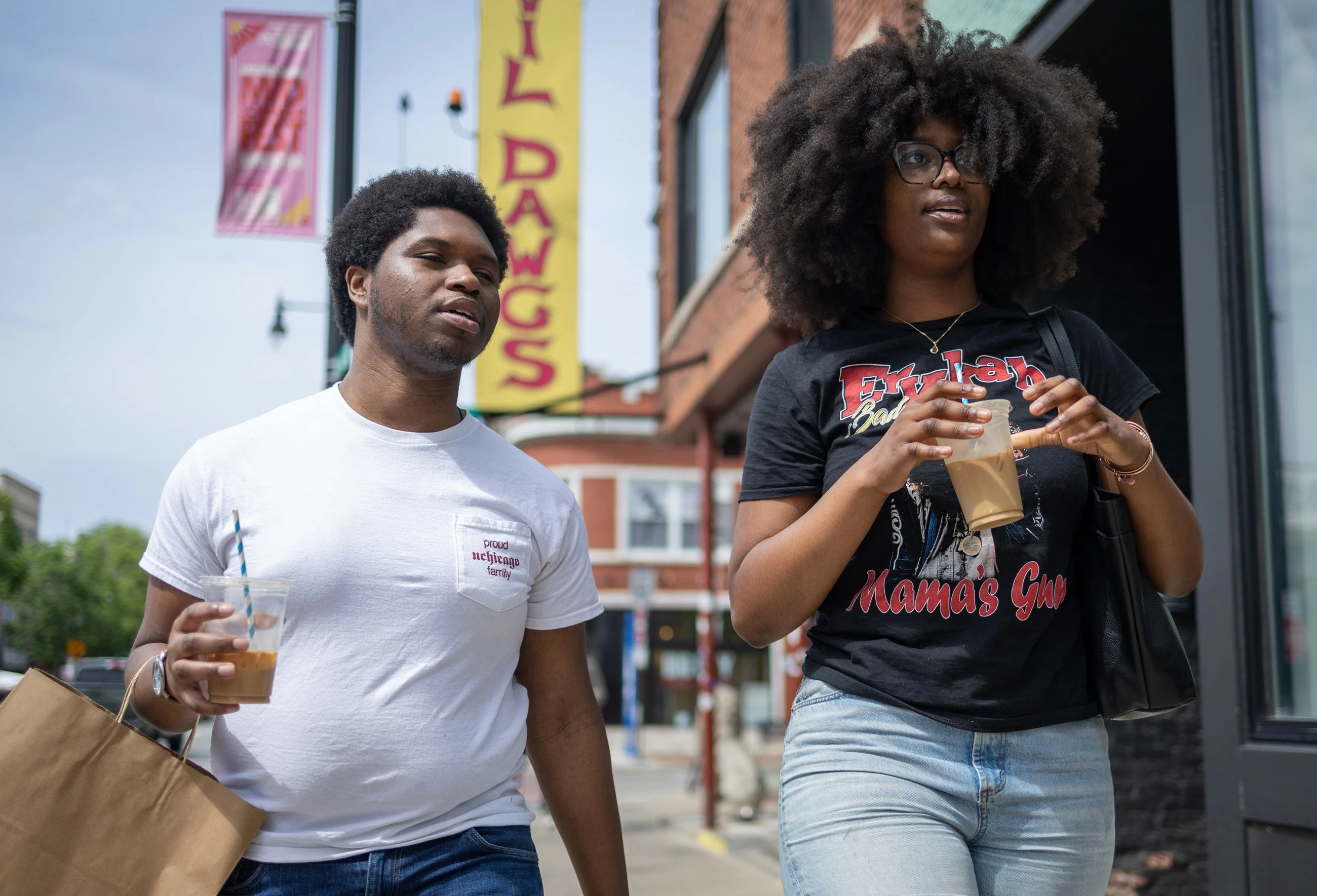
There’s something addictive about it. Sitting in bed late at night watching one 30-second clip after another. Bright, blue light illuminating the room. Whipping out a camera the moment a restaurant server brings a meal or a favorite performer appears onstage. Succumbing to the urge to scroll Instagram the second conversation grows quiet or social awkwardness creeps in.
The alarm bells began to ring in recent Loyola University graaduate Kamryn McPhaul’s head when she realised a third of her waking life was spent on her cellphone. She, like so many others, craved the “cheap hits of dopamine,” the sense of mindless joy she received from watching a short video only to forget it moments later.
Earlier this year, she decided enough was enough. Goodbye to Instagram and Snapchat; hello to sightseeing adventures, solo trips to the movies and hours spent at the Art Institute. The moment McPhaul installed a “permanent black-and-white filter” on her screen and deleted all her social media apps, she felt something shift. She doesn’t plan on going back.
While McPhaul’s mission to curb her screen time has been an individual endeavor, others are increasingly seeking out social spaces to join like-minded people hoping to unplug. The number of phone-free experiences grew by 567% globally in 2024 and 2025, according to Eventbrite, a platform where organisers can advertise events.
In Chicago, this trend has taken various forms: everything from creative spaces relegating devices to cotton bags and locked boxes to phone-free raves moshing into the morning’s wee hours.
Some of these events are planned and attended by young adults, most of whom hardly remember a world before instantaneous digital communication. In many cases, phone-free parties emerge in the form of novelty pop-ups, advertised as a chance to escape the pressures of an ever-demanding online universe.
“Some people want to let loose and be free and they don’t want to be filmed while they’re doing that,” said 29-year-old Samantha Boehlen, an event producer who helped plan multiple phone-free dance parties around the city.
‘How all of our parents hung out’ After acquiring her first iPhone at 13, Olivia Gork spent most of her young life wondering what a party free of digital disruption would look like.
She dreamed of dance floors packed with crowds who let music move through them. Bars where people entered as strangers and left as friends. But the more she went out, the more she realized phones inherently stood in the way of the experience she longed to have.
“I was ending the night just being like: Where were we?” Gork said. “Were we just capturing the moments or were we living them?” Unbeknownst to her, Gork’s vision was one she shared with event producer Chinaecherem Nwaubani, whom she met at North Coast Music Festival in 2024. Now business partners, the pair founded an agency, Saturnalia, to plan “otherworldly phone free(dom) gatherings.” Back in December, they hosted their first and only party to date at Fulton Street Collective, a West Town art gallery and event space. The event, with bright colorful fabrics draped from the ceiling, drew a crowd of more than 100 people, Nwaubani said.
Some came with friends and others came alone, but all followed the night’s one rule: Phones must be kept in a locked box by the entrance. “We debated putting them in little pouches, but something for me is that I just hate being encumbered and I was just like, what is a way that everyone can be as unencumbered as possible?” Gork, now 23, said. “I think the phone just needs to be completely locked up.” The zero-tolerance phone policy brought people together in ways even Gork and Nwaubani couldn’t have predicted. They were particularly struck by a moment when a group gathered to play chess with a security guard, and the fact that one attendee got so caught up in being screen-free, she forgot her phone at the venue when she departed for the night.
“This is how all of our parents hung out,” Nwaubani said. “There was a time not that long ago where this was just normal.” Boehlen, the 29-year-old event producer whose work ranges from creative collage clubs to nightlife, said she wishes she had been “more stringent” about phone usage when she helped plan a January dance party in Wicker Park. Over the years, she has advertised many of her events as being “phone-free,” but unlike the owners of Saturnalia, she never enforced the rule as anything more than a friendly suggestion.
Recently, she said, she attended a few events that weren’t marketed as screen-free, but ended up operating that way once she arrived. She recalled a concert’s policy of storing phones in automatically sealed bags as something that could be a good idea for her future functions.
“I think people can use their phone as a crutch,” Boehlen said. “It’s very easy to look down at your phone and just scroll or answer a text message, rather than sitting in that uncomfortability.”
For some, the notion of unplugging isn’t a new idea. With its eclectic collection of vinyl records and board games, Kibbitznest, a WiFi-free book bar in Lincoln Park, has been capturing the fancies of those seeking a digital detox for nearly a decade.
Audrey Pachuta, Tribune News Service