admin
admin After more than two-and-a-half decades as a legislator, Kerala Chief Minister VD Satheesan presented his maiden budget on Friday.
With the presentation of the revised State Budget for 2026-27, Satheesan also entered the rare list of Kerala Chief Ministers who have presented a Budget while in office, a distinction earlier held only by R. Sankar and Oommen Chandy.
Kerala plans to ease regulations and unlock its “land bank” to attract investment, especially from non-resident Indians (NRIs), to become a hub for aviation, logistics, and shipping.
In his first budget presentation, Kerala Chief Minister VD Satheesan announced a new land-use law aimed at reducing bureaucratic obstacles.
He highlighted the significance of NRI investment, noting that their remittances have greatly boosted Kerala’s consumption and living standards over the years.
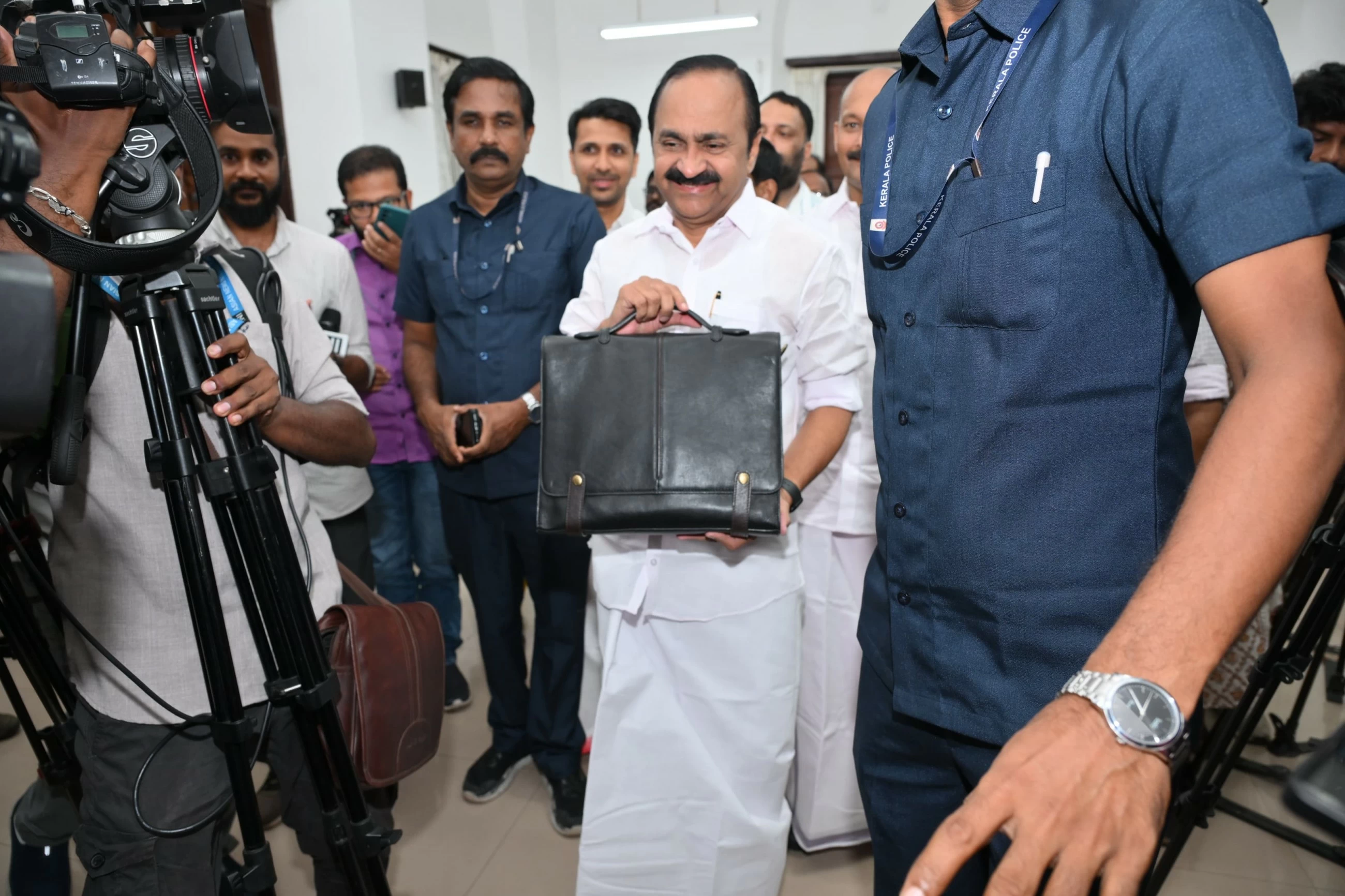
Chief Minister VD Satheesan arrives to present the state’s revised budget for 2026-27 in the Kerala Legislative Assembly on Friday.
To facilitate Kerala’s transition from a “remittance-based economy” to an “investment-based economy,” the government will establish an Investment Trust Fund.
“Mere remittances will no longer suffice for Kerala’s future development. NRIs must evolve into investors, entrepreneurs, and knowledge partners,” he said.
“NRIs have the potential to make collective investments in startups, tourism, agricultural value-added enterprises, the health sector, and educational institutions.”
He proposed a vision for a “New Age Kerala” focused on inclusive growth and sustainable infrastructure.
The government will focus on broad development, attracting investments, mobilising financial resources, and ensuring equitable wealth distribution.
A data-driven Invest Kerala cell will be launched to attract investment by tackling key business challenges.
He highlighted key challenges facing the state, including severe fiscal stress, hidden liabilities, lower remittances, and inflation.
He announced Mission Samudra, aimed at developing a port-led economy and positioning Kerala as a global maritime and economic hub. The government aims to position Kerala as a key player in the global maritime sector within five years, utilising its 600-kilometre coastline, two international seaports, one container terminal, and 17 non-major ports.
The initiative focuses on creating a port-led economy by developing a maritime ecosystem that integrates seaports, roads, railways, inland waterways, industrial zones, and greenfield cities.
He also outlined plans to develop Kerala as an aviation and logistics hub centred around its four international airports.
Proposed initiatives include a pilot training and flight-simulation centre, expansion of maintenance, repair, and overhaul infrastructure, a global convention centre, a green hydrogen hub, and battery energy storage systems.
The proposed expansion of MRO infrastructure is expected to enhance Kerala’s capabilities in aircraft maintenance services and support the growth of aviation-related industries.
Cochin International Airport currently operates two narrow-body MRO hangars and plans to add two more to meet future demand as outlined in the budget.
Another groundbreaking initiative is the “Kerala Silver Economy,” which focuses on establishing a dedicated department of elderly welfare, making Kerala the first state in India to take this significant step.
The development of a ‘Silver Economy’ will involve essential institutions, financial aid to boost purchasing power, entrepreneurship opportunities, and the effective utilisation of senior citizens’ expertise, guided by government policies.
A Silver Economic Policy will be developed to integrate eldercare services, retirement infrastructure, geriatric healthcare innovations, and elderly entrepreneurship. The government will conduct a statewide survey to gather insights from senior citizens about their priorities. Based on the findings, a long-term roadmap will be created to help the elderly in Kerala remain engaged and contribute to the Silver Economy.
The government will launch a six-month ‘caregiver certificate course’ in nursing colleges and hospitals to train individuals caring for those facing chronic illnesses, age-related challenges, and disabilities.
To promote physical and social activity among senior citizens, the government will create elderly parks, day-care centres, and fitness centres.
“This initiative aims to make them partners in development,” said Satheesan. “Kerala is the first Indian state to leverage the silver economy.”
Acute land scarcity, mobilisation limitations, and unclear legal frameworks pose significant challenges to Kerala’s industrial infrastructure goals.
While investors seek land for transformative projects, large areas owned by government departments and public sector undertakings remain underutilised or caught in red tape.
The government will create a comprehensive land management policy to address structural challenges, according to the chief minister.
This will include a legislative framework to establish a land bank using surplus and unused land from various departments and public sector undertakings.
Congress leader Dr Shashi Tharoor congratulated the chief minister for presenting “a Budget that seeks to look beyond immediate challenges and position Kerala for the future.”
“In a period of fiscal constraints, the emphasis on long-term economic transformation deserves recognition,” he said.
“What stands out is the attempt to move Kerala towards a growth model centred on investment, innovation, logistics, technology and employment creation.”