admin
admin Before Anghami, Spotify playlists and viral TikTok sounds, there was the soft click of a cassette sliding into place, the whirr of tape rewinding, and album covers that told stories before a single note played. Across Egypt, these tapes once carried the voices, aesthetics, and identities of an entire generation. Today, many of them are lost, forgotten in drawers, abandoned studios, or sold off in secondhand markets.
But, one man is trying to bring them back.
For artist and researcher Amr Hamid, the cassette is evidence of a cultural history that was never properly preserved. Hamid does not deal with the cassette as nostalgia metafour. “In fact, I hate nostalgia; it is a cheesy, naive, and superficial perspective especially when working to preserve the past,” he says. Through his Egyptian Cassette Archive on Instagram, Hamid is recovering a nearly invisible chapter of Egypt’s artistic past, one cover, one tape, and one story at a time.
It is an instagram account that posts daily images of different cassette tapes while attaching the song in the background. Within each post, Hamid gives credits in the caption to the artists who worked on the casette including the designer, the lyricist, and the singer.
“It started with curiosity,” Hamid says. “When I found my old cassette tapes… I started to ask questions about the designers who have done these beautiful artworks. And, I did not have any answers.”
The Mystery Behind the Covers
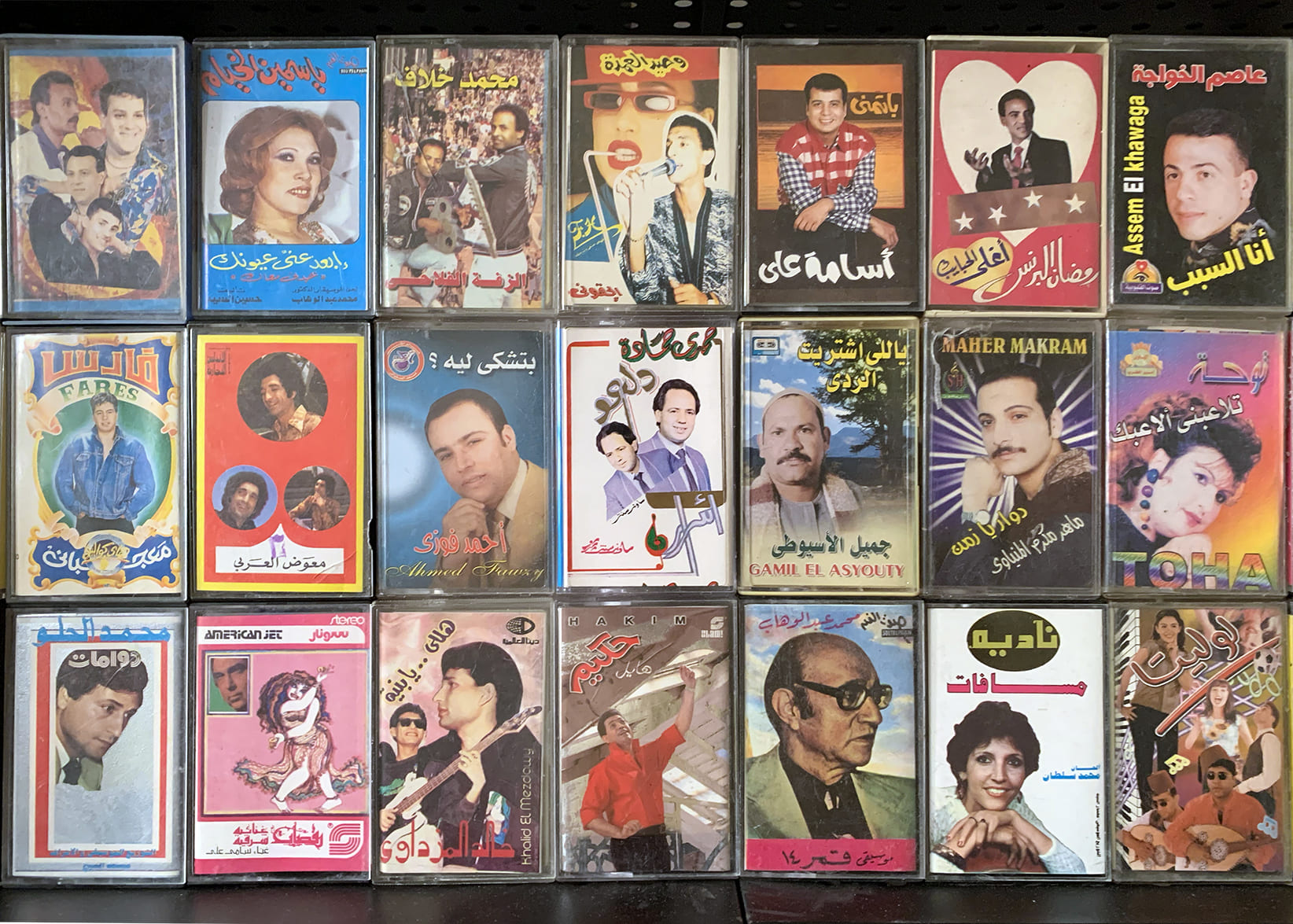
Hamid, a 2009 graduate of Fine Arts from Helwan University, was drawn not just to the music, but to the artistry of cassette covers including the typography, calligraphy, and visual language that defined that era. Yet, as he dug deeper, he encountered a troubling reality which is that most of the designers behind these works were virtually unknown and extremely difficult to find.
“Most of the designers were kind of unknown,” he explains. “When I asked people in the art scene… no one could really lead me to anything.”
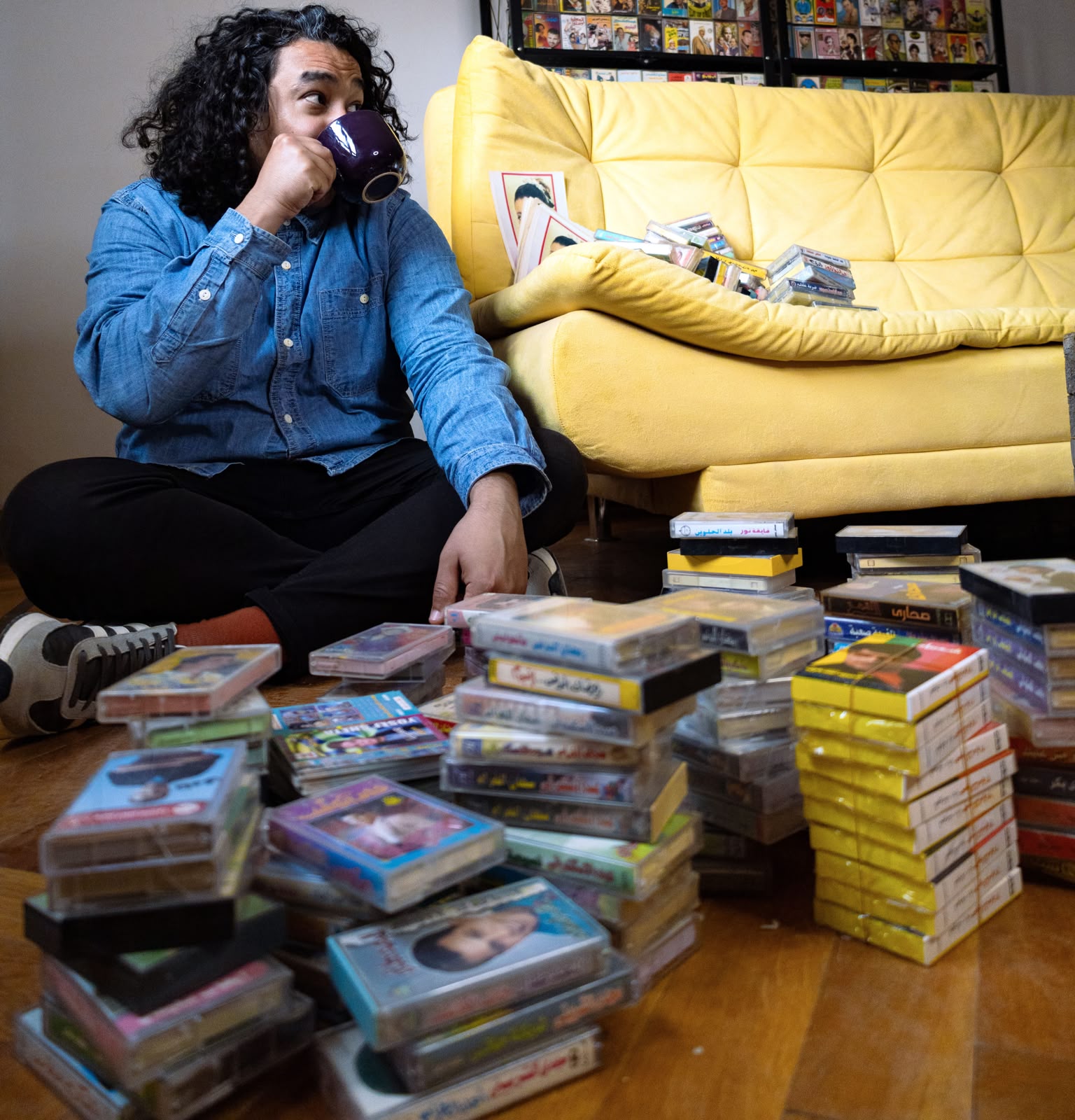
That absence of documentation became the driving force behind the archive. The project started in 2016 and went online on Instagram in 2020 as a personal investigation and has since evolved into a large-scale cultural project, now containing over 10,000 cassette tapes, along with various related materials, and is still growing.
Tracking a Disappearing Generation
Building the archive has been anything but straightforward. Many of the artists Hamid seeks are elderly which makes the process a race against time.
“Time is my first enemy,” he admits. “Most of these people are old… I’m afraid that they will pass away if they are still alive.”
Without a digital footprint to rely on, Hamid developed his own unconventional research methods. Instead of searching for the artists themselves, he often tracks down their families.
“I started to search about the people around the name, not the name itself,” he says. “So, I might find their son or daughter easily online.”
This approach has led to unexpected encounters, some warm, others cautious. “The relatives… sometimes have more questions than me,” he laughs. “They become suspicious, they say things like ‘What do you need from us?’”
Yet, more often than not, these interactions turn into moments of connection, with families opening up their homes and sometimes even their archives.
In one instance, Hamid gained access to an old production company lab that had been untouched for decades.
“It was really dusty… like an abandoned location,” he recalls. “And I found treasures.”
Inside were original design materials, including handmade collage artworks from a pre-Photoshop era and rare artifacts that reveal the painstaking craftsmanship behind cassette production.
“These are the real archives,” he says. “Not just the cassette you can buy, but the one original piece that you cannot find anywhere else.”
When a Research Project Boosts the Flea Market
As the archive’s Instagram page gained traction, Hamid began noticing that the very tapes he was preserving were suddenly becoming commodities.
“I can confidently say that… my project actively contributed to boosting the cassette second-hand market in Egypt” he says.
Cassettes that once sold for just a few Egyptian pounds are now being flipped for dramatically higher prices, sometimes overnight.
“I noticed that there were specific tapes that went viral on my page… get higher demand in the market later on… some of these cassette tapes reached EGP 1,500 (USD 30)” he explains. “That’s a crazy price for one tape.”
In some cases, a single post is enough to send collectors scrambling, reshaping the value of items that were, until recently, nearly discarded.
Just scratching the surface
While the archive thrives on Instagram, Hamid is quick to clarify that social media is only the surface.
“Instagram for me…it is an entertainment platform,” he explains. “It is to make people engage with their heritage… remember their memories, or even discover new arts, artists and music genres.”
The deeper work such as the interviews, rare materials, and research are being prepared for a dedicated website and future publications, including potential books.
“I love the book format more than digital,” he says. “But, I will provide everything in a searchable way… for researchers, artists, and the public.”
The Ethics of Preservation
Unlike many digital archivists, Hamid is deeply conscious of copyright and ownership, especially when it comes to music.
“I am aware of the copyright rules,” he says firmly. “I will not use material that is not mine… even if no one will ask me about it.”
For Hamid, preserving culture is not just about access, it is about respect. Usually on instagram, Hamid posts the cassette cover while attaching the sound of the song in the background. However, he only posts them if the song is available on the instagram sound library and would never post a song that is not available online even if he found several cassettes of it due to copyright reasons.
Building for the Future
The instagram account started as an individual initiative but it is now expanding into a much larger project. Hamid is currently developing an umbrella project: the Egyptian Cultural Heritage Archive, which will include collections on cinema, theatre, stamps, and more.
“We don’t have archives in Egypt about visual culture,” he says. “That’s insane.”
His long-term goal is to transform the project into an institution, one that can outlive him.
“I want the archive to live more than me,” he says.
At its core, the Egyptian Cassette Archive is not just about preservation, it is about reconnecting people with their own cultural history.
“For me, people have the right to enjoy their culture,” Hamid says. “To discover it, to remember it, to learn from it.”
And for a younger generation encountering these sounds and visuals for the first time, the archive offers something rare which is a bridge between past and present.
“They [the younger generation] are discovering what they missed,” he says. “And that is the point.”