admin
admin 
European and US stocks rose on Thursday while oil prices wavered following the latest flare-up in the Middle East war, with investors also assessing the outlook for US and European interest rates as inflation rises.
The European Central Bank, as widely expected, raised interest rates for the first time since 2023 after the Iran war sent oil and gas prices soaring as the Strait of Hormuz was cut off to Gulf tanker traffic.
“The rate hike should be seen as an insurance move to reinforce the ECB’s inflation fighting credibility, not as the beginning of an aggressive tightening cycle,” said Stefan Gerlach, chief economist at EFG Bank in Zurich and a former deputy governor of Ireland’s central bank.
The increase made the ECB the first of the world’s major central banks to lift borrowing costs in response to the energy shock unleashed by the US-Israeli war against Iran.
A series of fresh strikes between the United States and Iran has kept sentiment on edge this week, despite a ceasefire agreed to in April.
Oil prices wobbled Thursday chasing headlines. They fell back after US Central Command said it had completed the latest strikes against Iran, but then turned higher as US President Donald Trump vowed fresh strikes and to seize the country’s key oil infrastructure.
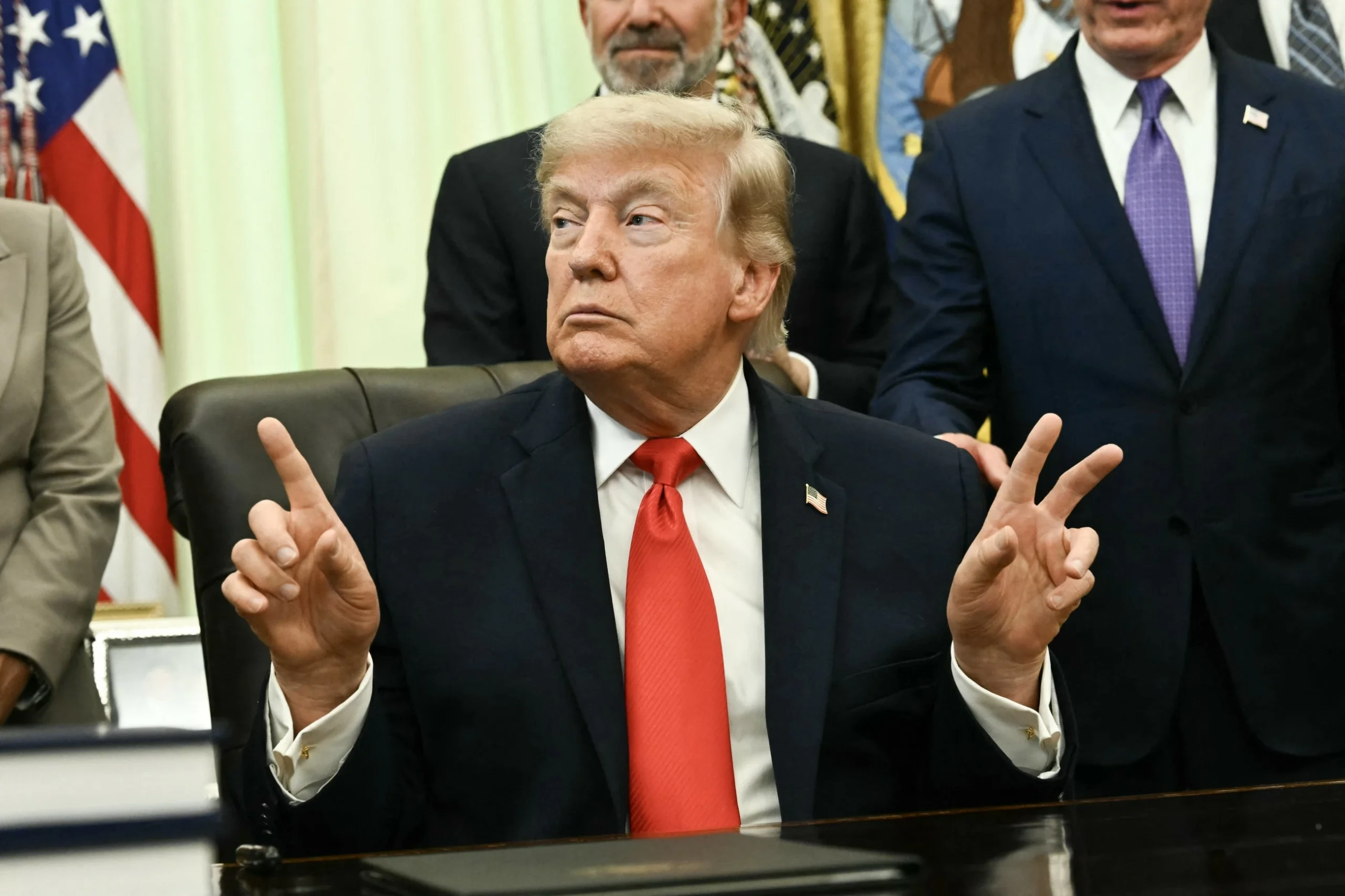
The US military will hit Iran “VERY HARD TONIGHT,” Trump said in a Truth Social post.
“At some point in the not too distant future, we will be taking Kharg Island, and other oil infrastructure points, and assume total control of their Oil and Gas Markets, much like we have with Venezuela,” he added.
In Asian stocks trading, Tokyo edged higher while Hong Kong and Shanghai declined.
That followed a weak session on Wall Street on Wednesday, where tech stocks again led declines after data showed a jump in US consumer inflation to a three-year high.
Wall Street’s main indices rebounded at the opening bell on Thursday despite data showing that US wholesale prices rose sharply in May, registering their highest 12-month increase in more than three years at 6.5 per cent.
Month-on-month prices rose by 1.1 per cent, which was higher than market expectations.
“The key takeaway from the report is that producers aren’t finding much price relief,” said Briefing.com analyst Patrick O’Hare.
“Hence, consumers won’t find much price relief in the near-term either, unless producers choose to absorb the higher costs,” he added.
Investors are increasingly turning their attention to the Federal Reserve’s policy meeting next week, with observers now suggesting a US rate increase could come before the end of the year.
Investors are also gearing up for the stock market debut of Elon Musk’s SpaceX, expected to be the biggest in history when shares start trading on Friday.
“Given there’s so much money riding on this… it could also influence broader market sentiment,” said Susannah Streeter, chief investment strategist at Wealth Club.
“A stronger, more durable debut may boost confidence in high-growth technology companies,” she said. “But a disappointing start could spark off another spurt of profit-taking across the sector” after huge gains since early this year.
Copper prices drifted to their lowest in three weeks on Thursday as the US threatened more more attacks on Iran, prompting funds to liquidate positions on worries about higher interest rates, weaker global economic growth and softer metals demand.
Benchmark three-month copper on the London Metal Exchange was down 0.3% at $13,481 a metric tone at 1450 GMT, having earlier touched $13,378, its weakest since May 20. President Donald Trump said on Thursday the US would hit Iran “very hard tonight” after the Washington and Tehran traded air attacks for a second straight day, undermining a shaky ceasefire.
“Copper’s move lower is being driven by macro headwinds rather than fundamentals. Escalating tensions in the Middle East are fuelling inflation fears and rate hike expectations,” said Ewa Manthey, commodities strategist at ING.
“Unless energy prices stabilise or rate expectations soften, copper is likely to remain under near-term pressure.” LME copper has shed about 6% since May 13, when it hit its highest in 3-1/2 months as funds piled into the market on supply issues and bullish technical signals.
Part of the recent weakness is from funds liquidating some of their long positions, but the lower prices have also spurred some buying by industrial consumers, traders said.
Lacklustre demand in top metals consumer China was highlighted by a 19% fall over the past 2-1/2 weeks in the Yangshan copper premium, which reflects demand for copper imported into China, to $59 a tone.
The most-traded copper contract on the Shanghai Futures Exchange lost 1.3% to reach 103,160 yuan ($15,223) a tone, having earlier touched its lowest since May 8.
Losses in copper were cushioned, however, by continued speculation about possible US import tariffs on refined copper, which has resulted in a premium on US metal and flows of material to the US, creating supply tightness elsewhere.
Available stocks in LME-registered warehouses have slid 37% to 226,975 tonnes over the past two months, according to LME data.
Agencies