admin
admin 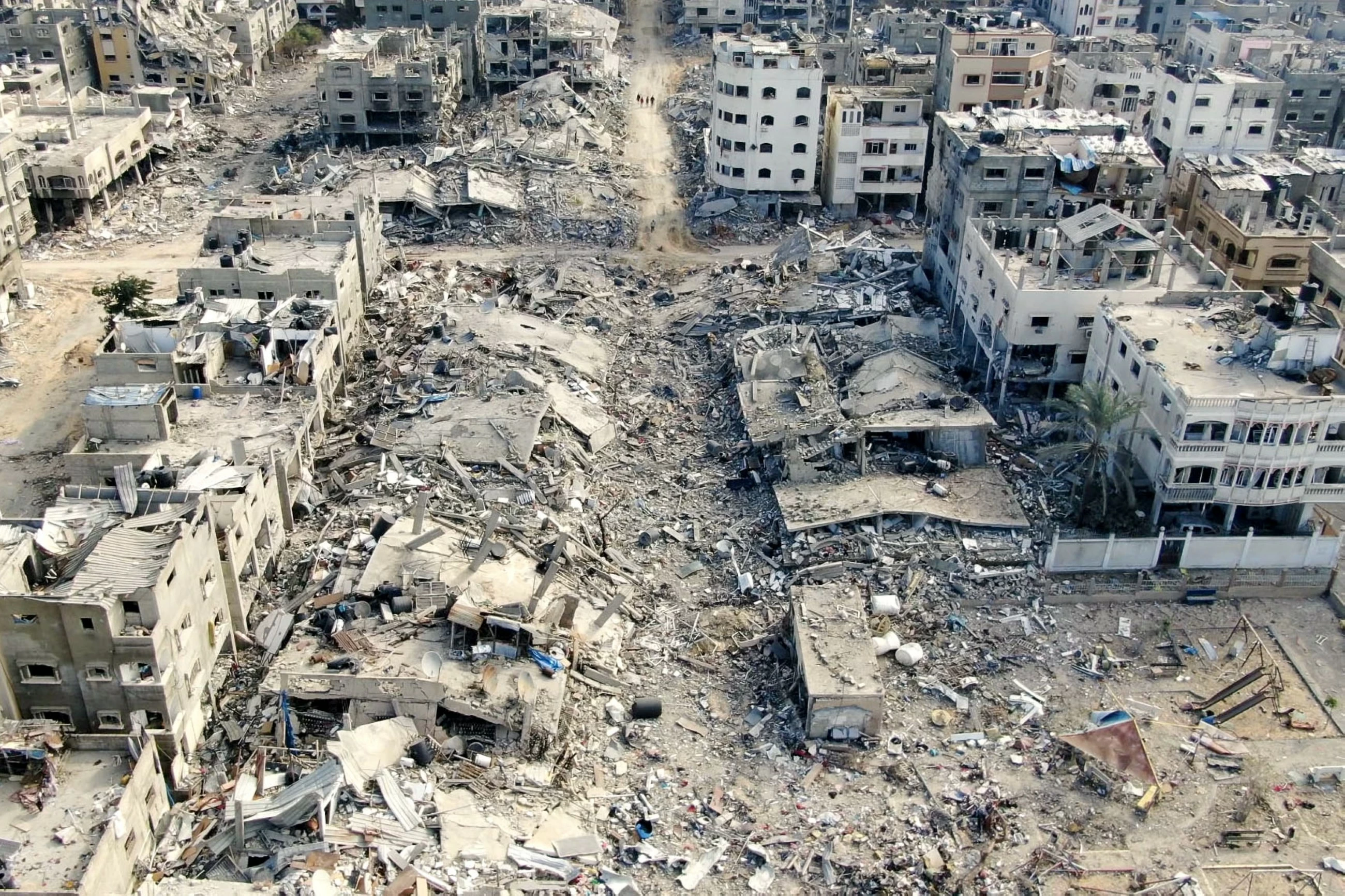
Israeli Prime Minister Binyamin Netanyahu’s expansion of Israel’s control of Gaza from 60 to 70 per cent is a violation not only of the repeatedly breached October 10th, 2023, ceasefire but also negates the peace plan put forward by Donald Trump in 2025. His plan calls for an immediate ceasefire, the return of all hostages, prisoner exchanges, Gaza’s demilitarisation, deployment of an International Stabilization Force, transitional governance by Palestinian technocrats with international monitoring, large-scale reconstruction, and a conditional pathway toward acceptance of Palestinian self-determination and recognition of Palestinian statehood.
The comprehensive plan was backed by the United Arab Emirates, the US, France, Germany, Russia, Italy, Spain, Egypt, Turkey, Qatar, Jordan, Indonesia, Pakistan, Canada, and Britain. Not by Netanyahu who has done his utmost to scupper the plan once the exchanges of hostages and prisoners took place while Hamas has said it would disarm once Gaza is free of Israeli occupation. Deadlock reigns.
Israel has already expelled Palestinians from the area it holds in Gaza, squeezing nearly 2.1 million displaced people into ever tighter areas. Israel has also officially urged Gazans to leave the Strip through the Egyptian border although they have nowhere to go. Human rights agencies have condemned Israel and warned against ethnic cleansing, which is a war crime.
Egypt will not accept Gazans. Jordan has given citizenship to West Bankers which it used to rule but not Gazans who were ruled by Egypt from 1949-67. While Gazan men have worked for decades in the Gulf their numbers have declined and most have not settled there. Many Gazans who left during earlier Israeli operations have returned to the Strip where they have core and extended families. The death toll in Gaza has risen to 72,819 while 172,894 others were wounded since the start of Israel’s offensive.
Meanwhile, Trump has ignored Gaza although he initially gave it priority. His board of peace has received no funds. It was meant to finance the Strip’s reconstruction post-deal after Hamas’ control ended. Supporters had pledged $7 billion and Trump $10 billion. Trump’s refusal to deal with Gaza reflects his flabby responses to crisis situations which he does not know how to handle.
Instead of implementing a solution for Gaza, Trump was dragged by Netanyahu into a war against Iran in the expectation that Israel, the regional superpower, and the US, the global hyperpower, would defeat Tehran in four or five days. Three months later, Netanyahu and Trump have been compelled to agree to a ceasefire in a war they have lost because Iran – driven by its anti-Israel-anti-US policy – has not surrendered. Although supreme leader Ayatollah Ali Khamenei and his chief aides were killed on the first day of the war, the regime has not collapsed. Senior officers from Iran’s Revolutionary Guard Corps (IRGC) are running the country with the backing of Khamenei’s wounded son, Moktada, who is in hiding.
Netanyahu intended the Iran war to provide a defining victory over Tehran that would secure him a favourable place in Israel’s history. However, he has been unable to turn military power into political advantage. Despite the exercise of over-whelming military power Israel’s enemies have been weakened but not defeated. Palestinian Hamas, the IRGC, Lebanon’s Hizbollah, and Yemen’s Houthis remain in the field while the post-Assad government struggles to govern Syria. Netanyahu contends areas Israel has seized in Gaza, Syria, and Lebanon as “buffer zones” that can prevent militant attacks like the October 7th, 2023, Hamas raid from Gaza. However, Palestinians regard Israel’s ”buffer zone” in Gaza as a means to permanently displace Gazans, stepping up pressure on them to emigrate by making it impossible for them to live safely, securely and decently with their families in Gaza. Israeli politicians portray their efforts as “voluntary migration” from the Strip.
Netanyahu desperately seeks a victory over Hamas in Gaza and in his war on Iran. Israel’s voters go to the polls in October, and he needs a victory for his Likud party, in power for 15 years. As long as he is in office, especially if he is prosecuting wars against Hamas, Hizbollah, and Iran, he hopes to escape prosecution for years of wrongdoing.
Since 2001 Netanyahu has been on trial accused of bribery, fraud, and breach of trust. The three cases being prosecuted are based on his relationships with wealthy and powerful Israeli businessmen. In the first case he is charged with accepting approximately $300,000 in cigars and champagne. In exchange, prosecutors allege he used his position to secure favours, including tax exemptions and help with US visa renewals.
In the second case, Netanyahu is alleged to have held discussions with Arnon Mozes, publisher of the Yediot Ahronoth newspaper, who proposed legislation to restrict circulation of a rival newspaper in exchange for favourable media coverage of Netanyahu. The third case, the most serious of the indictments, alleges that he provided regulatory and financial favours to telecommunications mogul Shaul Elovitch in exchange for permitting Netanyahu and his family to pursue positive coverage on his popular news website, Walla.
Netanyahu has not been successful in dodging Israel’s laws. He has been hailed repeatedly before the Jerusalem district court to testify although sessions have been cut short by his duties as prime minister. He has managed to delay and slow proceedings but not to escape the charges, with breach of trust being the most consequential and damaging.