admin
admin 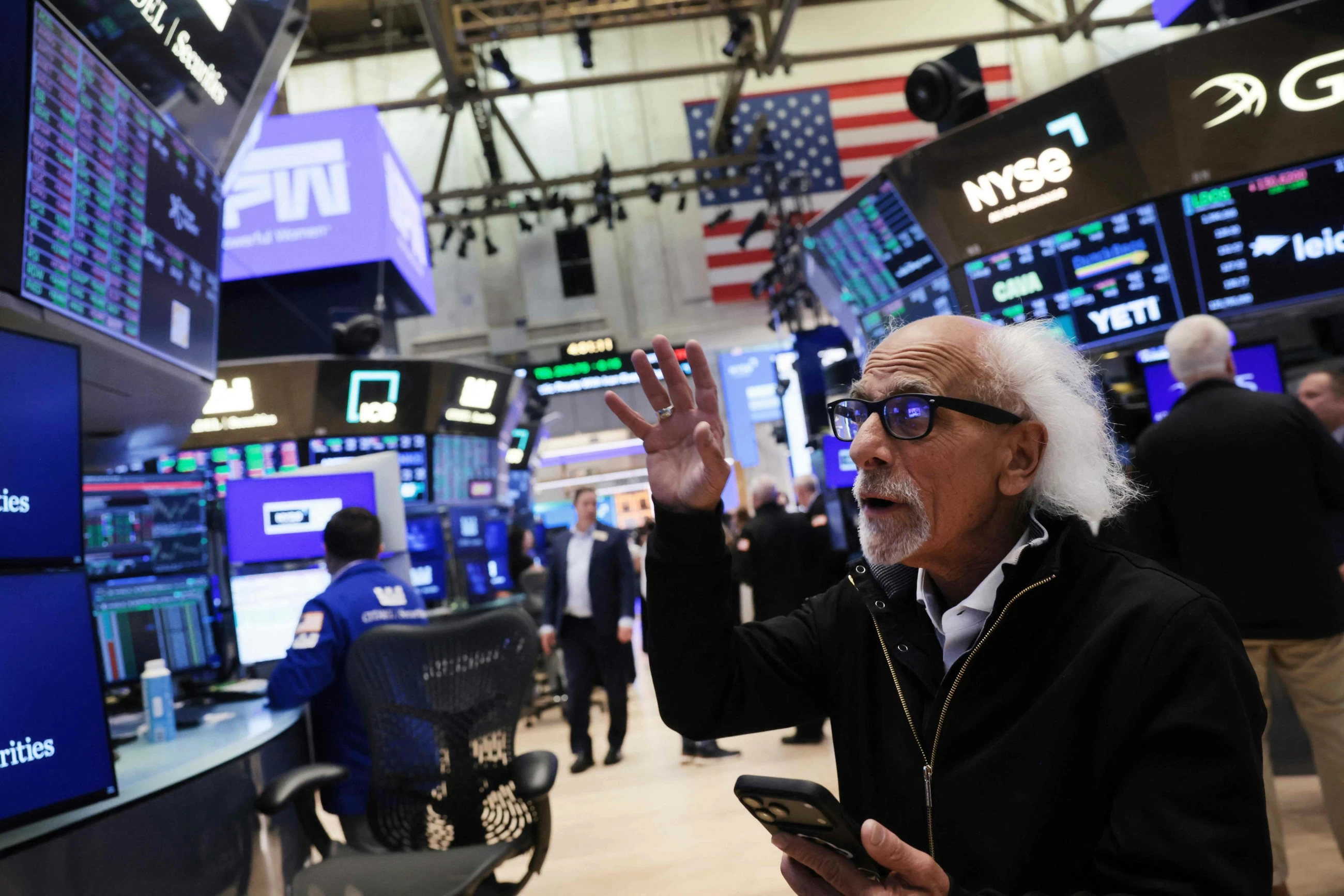
US stocks turned higher on Thursday and European shares pared their losses following reports that the United States and Iran have reached an agreement to extend the ceasefire and launch negotiations, after the two nations exchanged air strikes.
The S&P 500 and the Nasdaq reversed earlier losses, while European shares, though off session lows, remained sharply lower.
The agreement, reported by Axios, still needs the approval of US President Donald Trump, and comes after Iran targeted a US air base in Kuwait and the United States struck what Washington described as an Iranian drone complex near the Strait of Hormuz.
President Trump earlier rejected reports that Washington and Tehran had reached a compromise deal. A raft of economic data showed first-quarter US GDP grew at a more sluggish pace than originally reported, the saving rate sank to its lowest level since June 2022, inflation continued to heat up, and new orders for core-capital goods – a barometer for corporate spending plans – unexpectedly dropped.
The combination of weak GDP and rising price growth presents the US Federal Reserve, now under the Chairmanship of Kevin Warsh, with a dilemma regarding the central bank’s monetary policy.
“What the numbers point to today is simply that we have a stagflation problem, and that’s a big problem for the Fed,” said Peter Cardillo, chief market economist at Spartan Capital Securities in New York. “We have growth that’s not that strong and rising inflation, and that suggests that a Fed (interest rate) hike is getting closer to reality as opposed to a rate cut.” The Dow Jones Industrial Average fell 50.09 points, or 0.10%, to 50,594.19, the S&P 500 rose 18.40 points, or 0.24%, to 7,538.76 and the Nasdaq Composite rose 53.37 points, or 0.21%, to 26,731.28.
European shares dropped as U.S.-Iran tensions weighed on sentiment and dimmed hopes for a near-term reopening of the Strait of Hormuz, the long-term closure of which could threaten the health of the global economy. MSCI’s gauge of stocks across the globe fell 0.02 points, or 0.00%, to 1,122.26. The pan-European STOXX 600 index fell 0.48%, while Europe’s broad FTSEurofirst 300 index fell 12.20 points, or 0.49%. Emerging market stocks fell 11.71 points, or 0.67%, to 1,727.42.
Oil gave up gains on Thursday and traded lower briefly after an Axios report claimed that the US and Iran have reached an agreement for a 60-day ceasefire extension and the start of talks on Tehran’s nuclear programme.
Brent crude futures were up 33 cents, or 0.4%, at $94.62 a barrel as of 11:01am. US West Texas Intermediate futures were up 56 cents, or 0.6%, at $89.24. Both benchmarks traded down slightly after the report before recovering some ground.
The agreement between the US and Iran still needs final approval from President Donald Trump, who has told mediators he wants a few days to make the final decision, Axios reported, citing US officials and a source involved in the mediation. Oil prices have been volatile in recent sessions as traders parse through conflicting signals on the possibility of an end to the three-month Iran war and potential re-opening of the Strait of Hormuz. Traffic through the maritime chokepoint remains at a fraction of the pre-war level.
US Treasury yields turned lower on the day following news of a potential interim deal between Washington and Tehran. The yield on benchmark US 10-year notes fell 1.6 basis points to 4.465%, from 4.481% late on Wednesday. The 30-year bond yield fell 1.6 basis points to 4.9948% from 5.011% late on Wednesday. The 2-year note yield, which typically moves in step with interest rate expectations for the Federal Reserve, fell 0.8 basis points to 4.025%, from 4.033% late on Wednesday. The dollar edged lower against the euro and the yen in the wake of the largely disappointing economic reports. The dollar index, which measures the greenback against a basket of currencies including the yen and the euro, fell 0.23% to 99.07, with the euro up 0.2% at $1.1647. Against the Japanese yen, the dollar weakened 0.14% to 159.29. In cryptocurrencies, bitcoin fell 3.11% to $72,828.83. Ethereum declined 3.63% to $1,985.39. Gold prices pared earlier losses following the release of US inflation data and reports of a U.S.-Iran ceasefire extension. Spot gold fell 0.01% to $4,456.53 an ounce. US gold futures rose 0.15% to $4,454.90 an ounce.
Gold prices reversed course to rise on Thursday, rebounding from a two-month low hit earlier in the session, as the US dollar and oil prices eased following a report that said the United States and Iran were working to extend a ceasefire.
Spot gold was up 0.5% at $4,477.59 per ounce by 11:08am, after falling to its lowest level since late March earlier.
Axios reported that the US and Iran reached an outline agreement to extend their ceasefire, pending the approval of President Donald Trump. The US dollar index was down 0.2%, making greenback-priced bullion cheaper for overseas buyers.
“The trading gods seem to be intervening in gold today. First, the weak PCE, and now reports of an imminent deal that would open Hormuz, are giving gold a much-needed reprieve,” independent metals trader Tai Wong said.
“Gold was threatening to drop below the 200 day-moving-average early this morning – which many traders and investors consider a critical litmus test for maintaining an uptrend.” The PCE data suggeststhat the Federal Reserve may hold rates rather than pursue further tightening, said Bart Melek, global head of commodity strategy at TD Securities.
Agencies