admin
admin 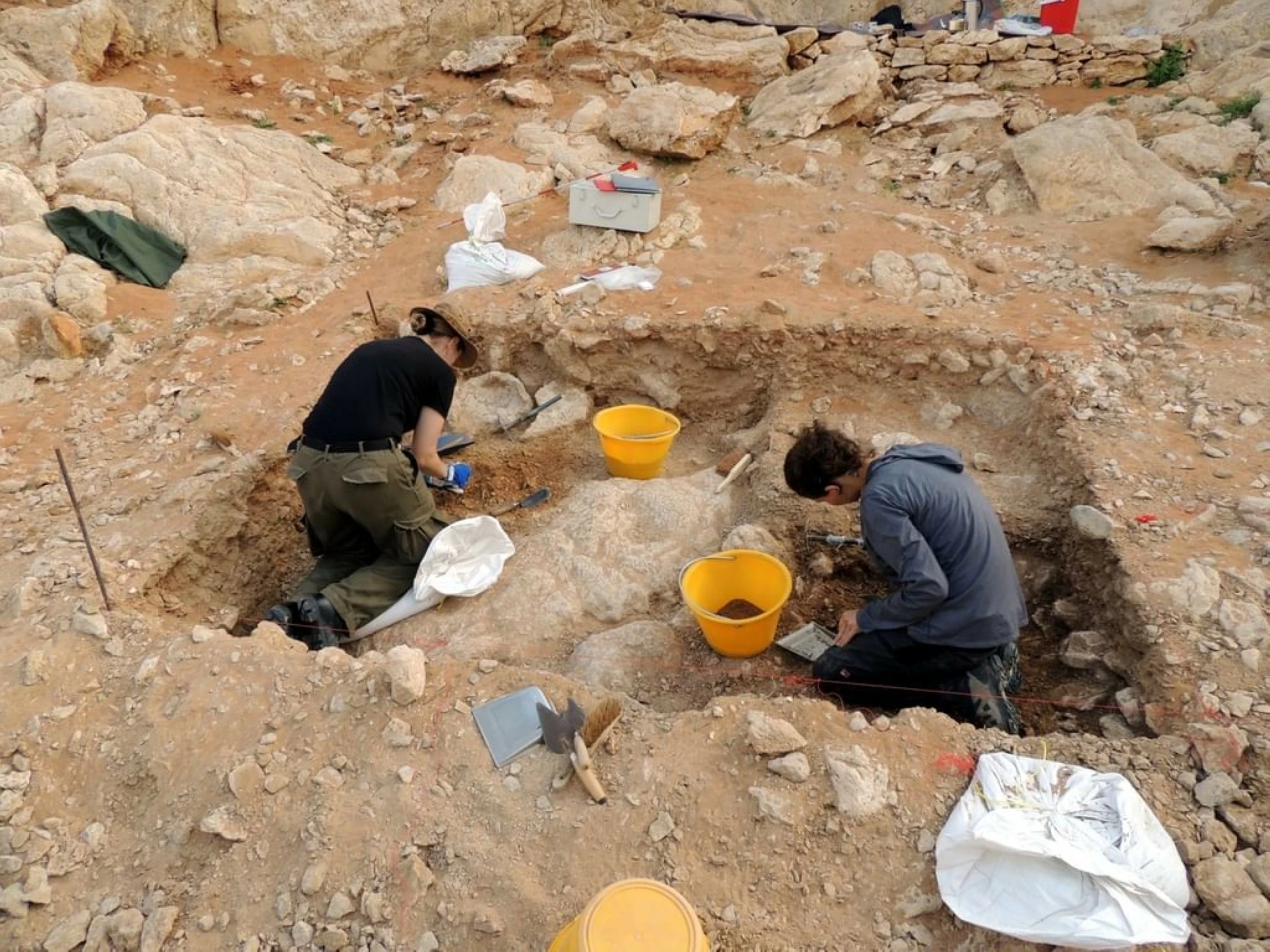
The Government of Sharjah has officially announced five international awardees of the prestigious Faya Research Grant Programme.
Leading universities in the UAE, UK, US, Germany, and Spain have been selected following a rigorous scientific review process that attracted 49 applications from reputable universities and research centres across four continents.
Launched following the inscription of the Faya Palaeolandscape on the UNESCO World Heritage List, the Dhs2 million programme was established to advance scientific research into early human occupation, migration, environmental change, and adaptation in Arabia through long-term archaeological and palaeoenvironmental investigation.
Administered by the World Heritage Office at the Sharjah Archaeology Authority (SAA) in coordination with the Faya World Heritage Property Scientific Committee, the programme comprises one long-term research grant, six short-term scientific grants, and a dedicated mentoring fellowship track for Emirati archaeologists.
Together, the selected projects are expected to generate major new environmental, archaeological, genetic, and geological datasets that will strengthen international understanding of human history in southeastern Arabia and reinforce Faya’s growing importance within global human evolution research.
Announcing the selected projects, Sheikha Bodour Bint Sultan Al Qasimi, Ambassador of the Faya World Heritage Property, said, “The quality and diversity of applications received from across multiple regions reflects the growing scientific importance of Faya within international archaeological research. The selected projects were chosen for their methodological rigour, originality, and long-term scholarly value, as well as their ability to strengthen the scientific foundations of the World Heritage Property while contributing to broader global research questions related to human adaptation, migration, and environmental change.
“These projects reflect the level of scholarship and intellectual ambition that a World Heritage landscape of this importance deserves. By bringing together expertise from multiple disciplines and regions, the Faya Research Grant Programme is helping establish a long-term scientific framework through which new knowledge about human adaptation, migration, and resilience can continue to emerge from Arabia,” she added.
The programme’s flagship long-term grant was awarded to Professor David Thomas of the University of Oxford for the project FAYA-PAST: Faya Palaeolandscape Analysis and Spatio-Temporal Evolution.
The project is being conducted in collaboration with Professor Mohammed Y Ali of Khalifa University and Dr Julie Durcan of the University of Oxford.
At the Mohamed Bin Rashid University of Medicine and Health Sciences, Dr Mohamed Almarri, alongside co-investigator, Professor Simon Underdown, Oxford Brookes University, UK, will lead (FAYA-GENOME) Ancestry, Kinship, and Adaptation: A Paleogenomic Reconstruction of the Faya Palaeolandscape.
The 2026 project is the first study of its kind in Neolithic Arabia, combining ancient DNA from burials with sedimentary DNA to map the ancestry, kinship, and social structures of early communities.
Professor Lesley A. Gregoricka of the University of South Alabama will lead the (FAYA-ISCOSCAPE) Faya Strontium Isoscape Project: Human Mobility in the Faya Palaeolandscape.
For 2027, Faya Short-Term Grants, the Faya Scientific Committee awarded to Dr Nuria Sanz Gallego of the University of Tubingen for (FAYA-GLOBAL) Human Evolution, Migration, Adaptation and PalaeoScapes Platform for the Faya Palaeolandscape.
Meanwhile, Dr Andrea Guerrero of Universidad Nacional de Educación a Distancia will lead the other project slated for 2027, titled (FAYA-LITHIC) Lithic Landscapes of Sharjah: A Multiscalar Geological Framework for Jebel Faya. The project will develop the first detailed geological framework linking stone resource distribution to early human behaviour at Jebel Faya between 210,000 and 80,000 years ago through advanced digital mapping, geochemical analysis, and spatial modelling.
WAM