admin
admin 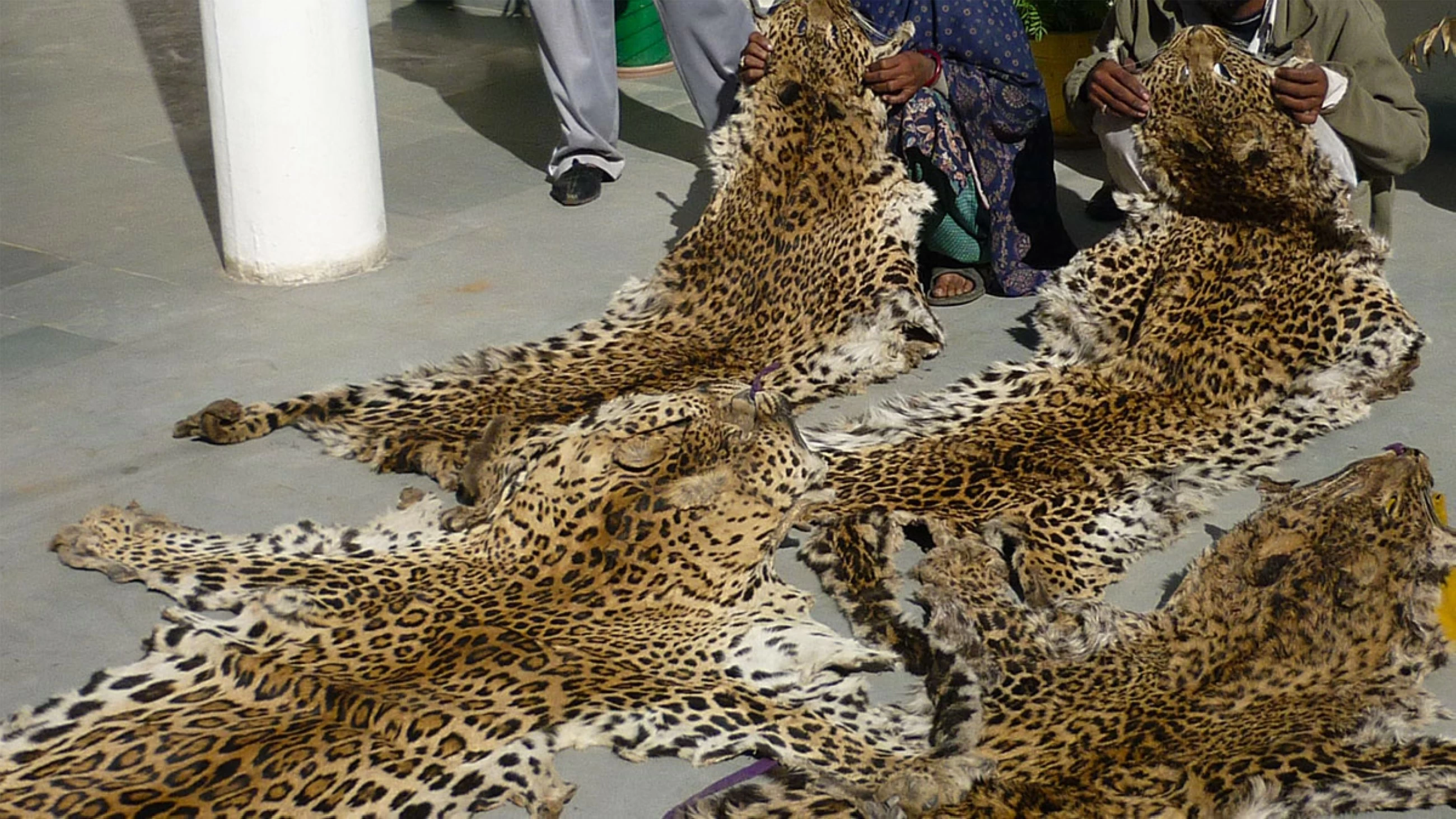
Rising illegal wildlife trade across Himalayan countries is threatening the mountain ecosystem, a Mongabay-India (MI) report highlights.
The MI report cited a study titled ‘Ghost economy: The forbidden trade of the Himalayas’ published in January 2026 based on findings by researchers at the International Center for Integrated Mountain Development (ICIMOD) in Kathmandu, Nepal. The study has found that illegal wildlife trade is happening across eight countries in the Hindu Kush Himalaya (HKH) region and has doubled from 2019 onwards compared to 2018 and previous years. India and China recorded thousands of seizure incidents, with carnivores, elephants, pangolins, and various endangered animals trafficked for live trade, body parts, and traditional medicine, according to the research. Illegal wildlife trade is the fourth largest illicit transnational activity in the world. It remains an attractive business for poachers and smugglers, with Southeast Asia at the epicentre of much of this crime. Over 12,000 species of animals and plants have been traded internationally in recent years.
The study presents a list of highlights. Millions of wild plants and animals, worth $8–23 billion annually, are traded illegally, with 24 % of terrestrial species originating from biodiverse regions like the HKH. High demand for traditional Chinese/Tibetan medicine, folk remedies, weak law enforcement, high market prices, and mountain poverty fuel the illegal wildlife trade in the HKH. Weak wildlife laws, insufficient resources, porous borders, harsh terrain, and lack of regional cooperation hinder efforts to combat poaching and trafficking. Limited understanding of wildlife supply chains’ socio-economic and ecological impacts, along with low community awareness, contributes to illegal trade rather than conservation efforts. Strengthening institutional capacities, enhancing regional law enforcement cooperation, conducting scientific studies on trade trends, and raising public awareness are crucial to curbing wildlife trafficking in the HKH.
The foremost driver of this illicit trade is the consumer demand for wildlife products, according to the study. People acquire wildlife as luxury and fashion items, speciality foods and exotic pets. There is also a growing demand for traditional Chinese and Tibetan medicines and folk remedies, which use wildlife derivatives. To meet consumer demand, a large variety of wild species is trafficked. The study lists carnivores, elephants, pangolins, testudines, antelopes, snakes, birds, lizards, amphibians, crabs, insects, and flowering plants as trafficked species. While live animals made up the largest trafficked group to be sold, the commodities included specimens, skins, ivory artefacts, roundwood, scales, horns, tusks, bones, claws, teeth, meat, shells, gall bladders, skulls, feathers, and furs. These species then become a part of crossborder trade, according to the study.
The MI report explains that the HKH stretches over 3,500 kilometres from west to east, spanning either all or part of these eight countries – Afghanistan, Bangladesh, Bhutan, China, India, Myanmar, Nepal, and Pakistan. The region hosts four global biodiversity hotspots – Himalaya, Indo-Burma, and the Mountains of Central Asia and the Mountains of Southwest China. It is home to rare and endemic species such as red pandas, snow leopards, one-horned rhinos, Asian elephants, and Bengal tigers.
There is also a link between illegal wildlife trade and zoonotic diseases, where more than 75% of pandemics can be traced back to wildlife. The increase in wildlife trade from 2019-21 has been linked to the Covid-19 pandemic, the study reveals. Due to lockdowns, there was less law enforcement and surveillance. Economic hardships and food supply chains disruptions pushed communities towards poaching. For instance, the study showed that India reported a 151% increase in poaching during the pandemic and Nepal and Bangladesh also recorded a rise in such incidents.
As pointed out in the abstract of the study, a lack of understanding of wildlife supply chains’ social, economic, and ecological dimensions hindered informed policy and legislation. Lack of awareness among communities and other stakeholders made them partners rather than custodians. The region needs to strengthen institutional capacities for effective legislation and action, and greater regional cooperation for intra-regional law enforcement to control illegal trade of wildlife. Scientific studies on the scale, trend, and patterns of illicit wildlife trade are crucial for understanding the social, economic, and ecological dimensions of unlawful wildlife supply chains in the HKH. Mass awareness about biodiversity conservation values will help create responsible stewards among mountain communities.