admin
admin 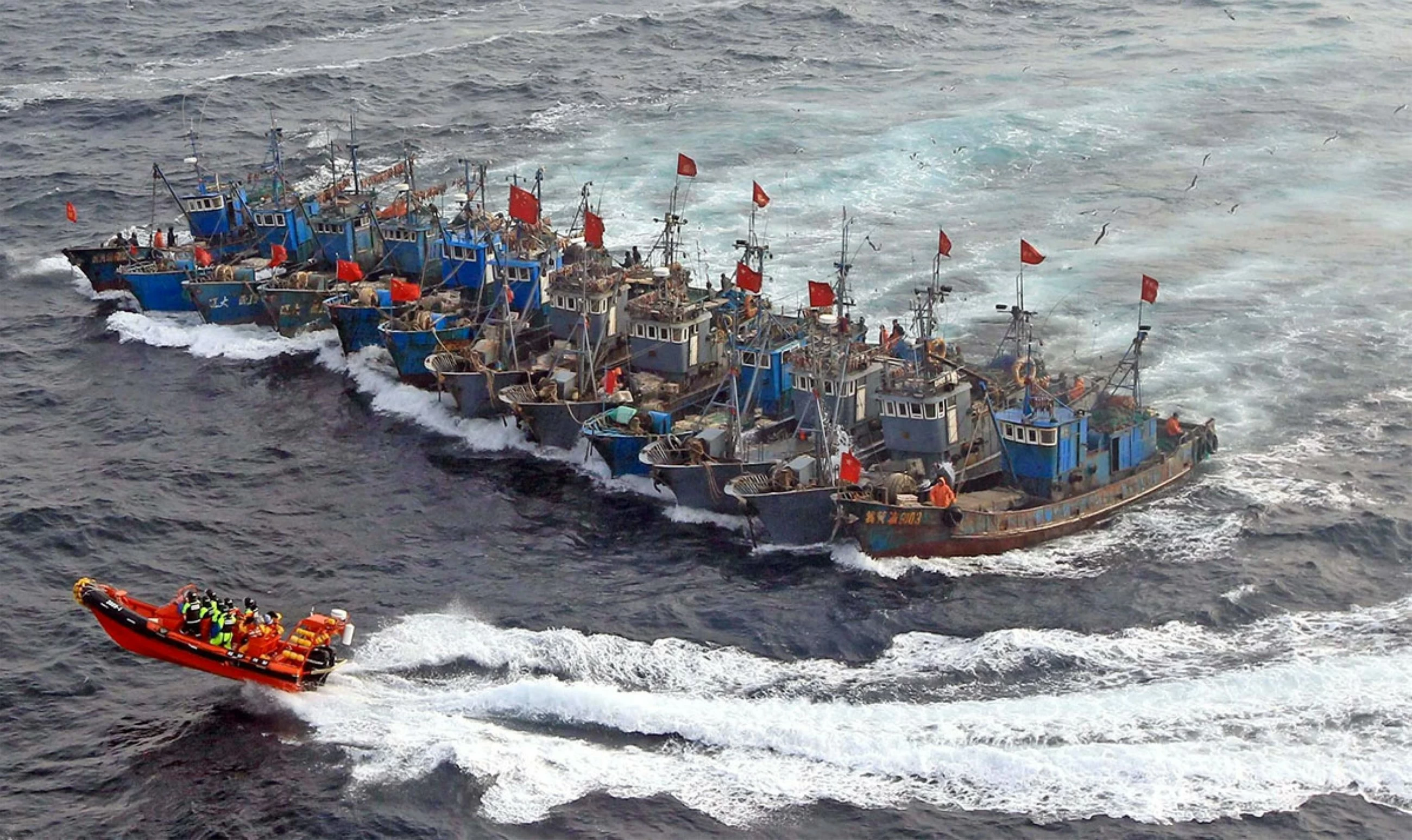
Leila Miller and Farah Master, Reuters
On a balmy January night, an Argentine coast guard ship’s radio picked up garbled Mandarin broadcast from nearby boats. They were among some 200 Chinese fishing vessels that spend months at a time each year near the South American country’s waters, hunting primarily for catch to feed the world’s largest squid market. The size of the flotilla has increased by nearly 50% over the last decade. In that time, Buenos Aires has bulked up its surveillance to ensure the fleet doesn’t fish in the exclusive economic zone where Argentina controls all maritime resources. But fears of overfishing just outside the country’s waters remain, as do suspicions of intelligence gathering that were also shared by Washington, according to interviews with four Argentine and four US former and current officials.
Washington’s efforts to spotlight global overfishing by Chinese-flagged vessels date back to the late 2010s, as the first Donald Trump administration began to emphasize US strategic rivalry with Beijing. Trump, who last year extended a $20 billion economic lifeline to Argentine leader Javier Milei’s government, has since declared US “dominance” over the Western Hemisphere to be a key objective of his administration.
That has set Washington at odds with China, which has over the last 20 years invested heavily in Latin America, including Argentina. Beijing has developed Venezuela’s oil sector, built Brazilian and Peruvian port facilities and set up a military-run space-observation station in Argentina that has drawn US scrutiny. China’s Foreign Ministry said in a statement in response to Reuters’ questions that the suspicions of intelligence gathering around the fishing fleet were “pure speculation, lacking any factual basis.”
“China is a responsible fishing nation, strictly enforcing the regulation of its distant-water fishing activities and engaging in mutually beneficial fisheries cooperation with relevant countries in accordance with international law,” the ministry said.
The US has helped Argentina better patrol its waters to protect against illegal fishing, including approving its purchase of US-origin P-3C Orion maritime surveillance aircraft. Argentina has had suspicions that some Chinese fishing boats were equipped with antennas that are inconsistent with fishing activities, said Marcelo Rozas Garay, who served as vice minister of defense in 2025.
“We think what they were looking for in reality was information or intercepting communication,” he said, without providing details about the antennas. Buenos Aires and Washington have also discussed Chinese vessels that Argentina observed moving in ways which indicate that they could be mapping the continental shelf for undersea resources, said Juan Battaleme, the defense secretary for international affairs under Milei until December 2025. Under international law, only Argentina can explore and exploit resources on its shelf.
Washington was concerned that China is using its fleet to build a regional presence and test Argentina’s ability to control its waters in the South Atlantic, which offers access to Antarctica and other key water passages, said one of the former US officials, who spoke on condition of anonymity to discuss sensitive matters.
The people interviewed for this story did not provide evidence for their suspicions. A Reuters review of maritime movements from January 2025 to March 2026 using a ship-tracking platform built by New Zealand company Starboard Maritime Intelligence found no evidence of Chinese-flagged vessels engaging in mass seabed mapping activity around Argentina during that period. The firm’s data did not rule out such activity on a smaller scale.
Argentine officials notified Beijing when incidents of possible seabed mapping were spotted, Battaleme said, without providing details about the episodes. The Chinese officials replied with “ambiguous” excuses about why the trajectory of a boat had been altered, he said.
China’s Foreign Ministry did not address a question on its interactions with Argentine officials in its statement.Argentina’s defense ministry and coast guard did not respond to requests for comment.
A spokesperson for the US Department of Defense would not comment on the specifics of private diplomatic or intelligence exchanges with Buenos Aires, but said that Washington “views Argentina as a key leader in regional security.”
The Pentagon is concerned by activities that “challenge the ability of sovereign nations to manage their own waters” and is “aware of global concerns regarding the dual-use nature of certain distant-water fishing fleets,” the spokesperson said.
Global overfishing fears are rooted in the size of China’s heavily subsidized distant-water fishing fleet, the largest in the world.
The London-based ODI Global think-tank has said China’s fleet numbers over 16,000, while the Chinese government said in 2023 that it was composed of about 2,500 boats. About half of all visible global fishing activity can be attributed to Beijing, the US-based Oceana nonprofit said last year. Chinese fleets expanded across the world largely after Beijing overfished and depleted stocks in its own coastal waters.
In the South China Sea, such fleets include militia units whose members are full-time fishermen but can also be called up by Beijing to support security tasks, said Collin Koh, a security scholar at Singapore’s S. Rajaratnam School of International Studies. Gregory Poling, a maritime security expert at the Center for Strategic and International Studies, said he had seen no evidence of systemic militia activities in the Chinese fleet off Latin America. China has not publicly acknowledged the existence of commercial boats in its maritime militia, he said.