admin
admin
“All the beauty in you holds me, my love,” Egyptian artist BOSA, formerly known as Bosaina, sings softly and ethereally in Arabic in her latest dream-pop single, Shat Geded (A New Shore, 2025).
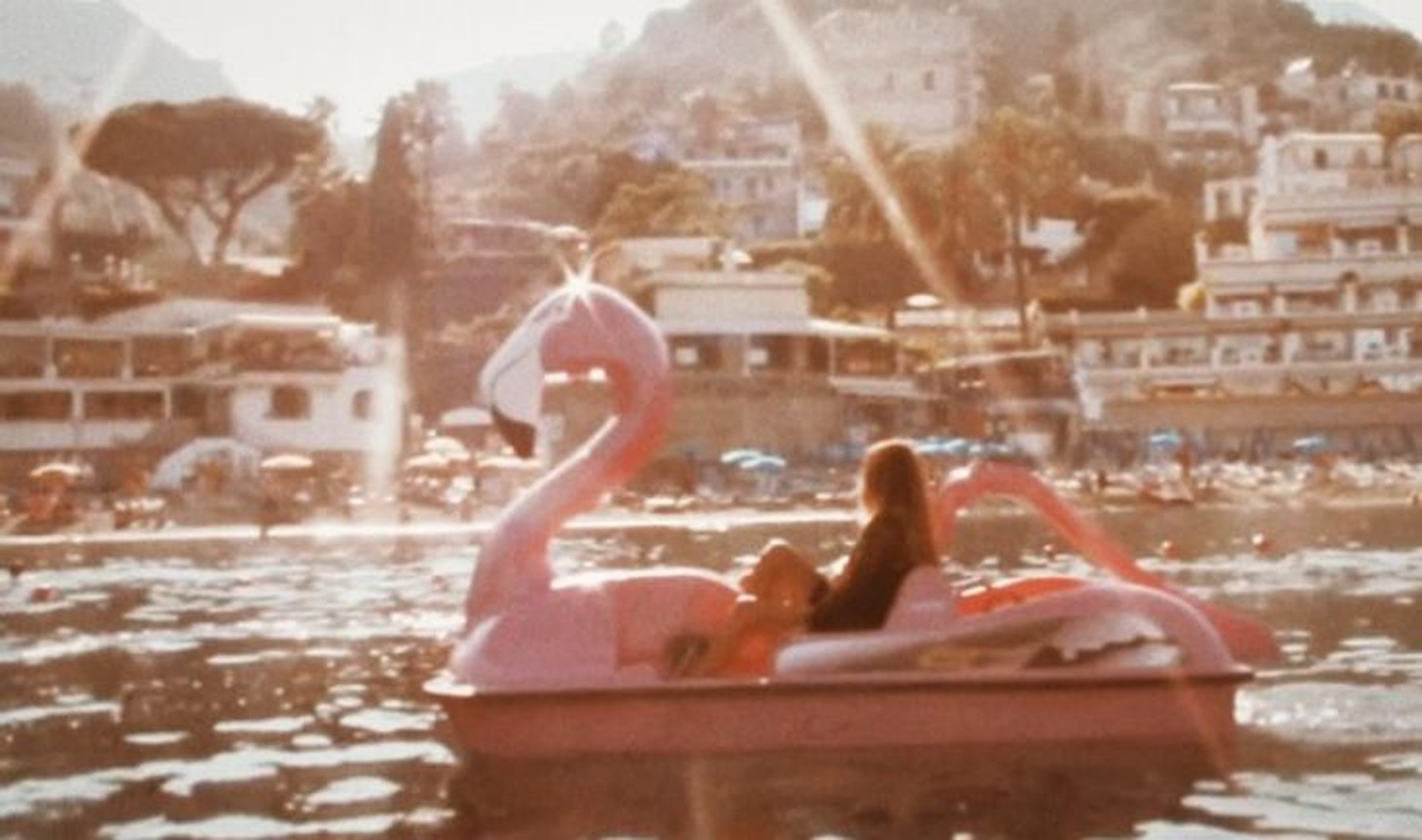
The crashing waves, the vivid bursts of the pink flamingo ride, and the sea-lit glow of the music video are not the only images that conjure the feeling of the seashore. There is another shoreline unfolding beneath it all; one that lives within her mind, visible only through the song’s dreamlike haze and drifting beauty.
Using vintage-style film grain and warm, sun-drenched shots of a coastline, the song gently takes the hand of its listeners and leads them into the dreamy interior of BOSA’s mind, a place where all the beauty in the world can reveal itself through a single moment, or even through the gaze of one lover.
It is the kind of music one can completely sink into, or that can accompany a long, warm bath. While dream-pop is often linked to Western influences from the 1980s or the psychedelic rock scene of the late 1960s, BOSA takes the genre in a different direction, showing how it can also be shaped by Arabic poetry, particularly the work of Egyptian poet Salah Jahin.
Performing within BE INDIE’s ethereal visual world at the Sandbox Festival 2026 on 8 May, BOSA crafted a stage concept that was both intimate and whimsical. The setup mirrored the ethereal vibe of her dream pop music, elevating it from a purely listening experience to a fully immersive live moment.
“I’ve always been into sound that’s a bit blurred, where you don’t hear everything perfectly,” BOSA tells Egyptian Streets.
“It’s a little grainy, a little nostalgic, a bit dreamy, and very BOSA.”
Classic Arabic Poetry and Dream Pop
There is a specific feeling that the best music right now tries to capture. It is not quite sadness, nor happiness. It is more like standing in a beautiful moment and already missing it.
This kind of longing aesthetic has often been framed through the lens of American singer Lana Del Rey, who built an entire world of it, a world that is honeyed and cinematic, soaked in Americana and the wreckage of the American dream, suffused with a particular melancholic melody.
Yet BOSA arrives at that same feeling and aesthetic through a completely different door, and that door is poet Salah Jaheen.
Jaheen was an Egyptian poet who wrote in everyday colloquial Arabic, yet what made his style unique was his ability to capture the beauty of nature, such as the sun, the Nile, love, and ordinary faces, and turn them into beautiful moments that can easily be forgotten and drifted, making one constantly drawn to listen to it and to read his poetry again and again, just to relive that moment.
Much like Jaheen, BOSA also draws inspiration from the beauty of nature and love, connecting the experience of loving nature with the feeling of falling in love, and explores, through her dreamy sound, how both experiences can feel fleeting yet irresistibly addictive.
“I’m really drawn to classical Arabic poetry, but also folk traditions,” BOSA says.
“They’re both very elemental. I naturally think in those terms, like sublime art, skies, birds, myth, all of that, to reflect an inner landscape.”
Listening to BOSA’s lyrics, one can feel this particular mood immediately. She does not try to constantly spell out or translate the meaning behind her words, but instead lets her subconscious do all the talking, allowing the listener to form their own interpretation of what she means.
In one lyric, for instance, she softly sings, “the waves pull us far away… they throw us onto a new shore.” The song does not try to explain what happened or lay out a clear story, and yet, this is exactly what makes it so captivating, because it does not seek to provide any conclusions or answers.
And this is how Jaheen’s poetry works. He trusts the reader to feel what could not be explained or spoken, pointing toward something too vast for language to capture, and then stepping back. As he beautifully writes in one poem from his renowned collection Ruba’iyat (The Quatrains, 1959–1963), “How can I find a path of my own choice, when coming into life was not my choice?”
Jaheen knew how to turn life’s bizarre and often strange realities into dream-like poetry, and BOSA is doing the same thing, only now set to music and framed in a different era.