admin
admin 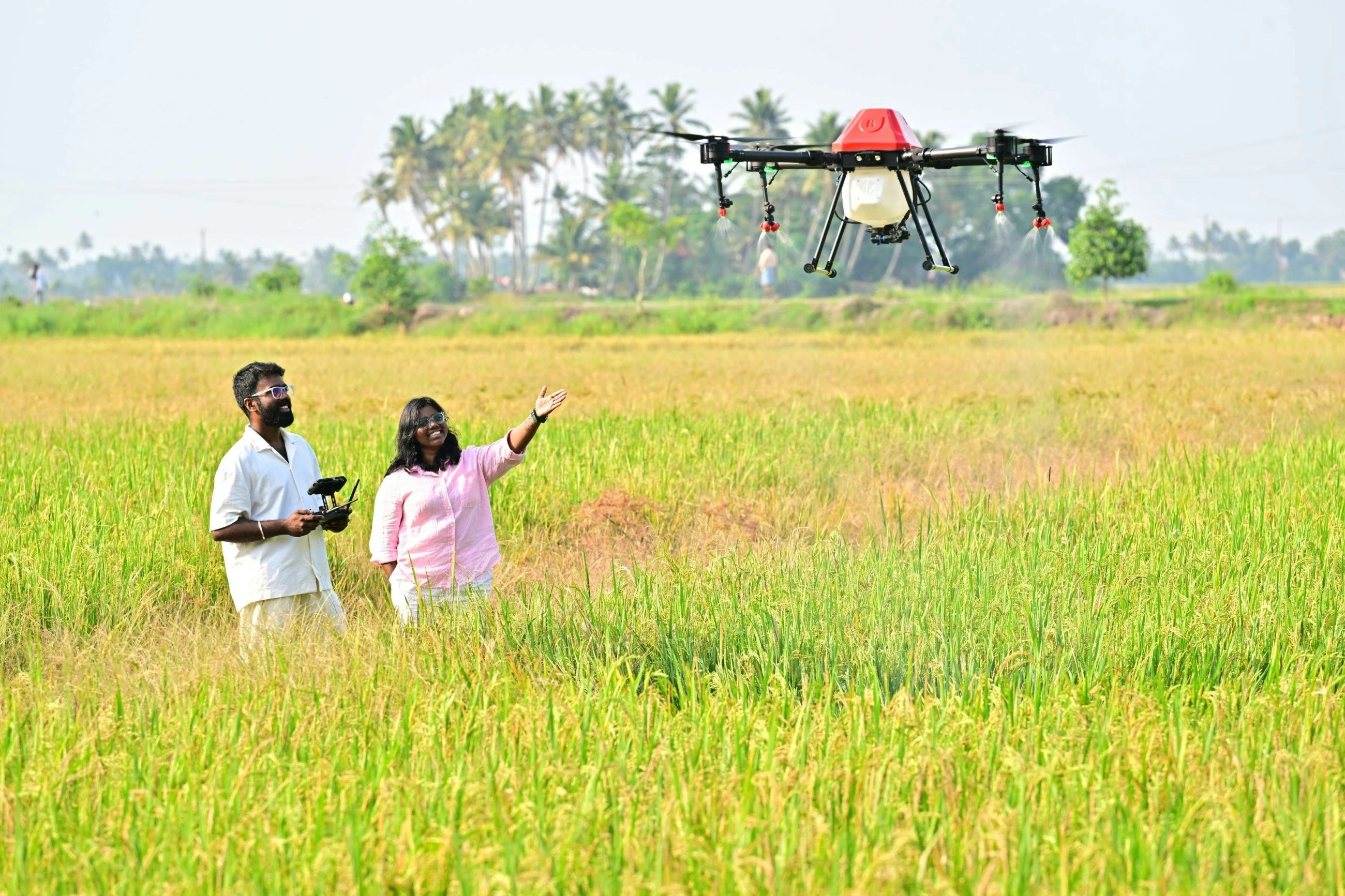
Seven private innovation-driven start-ups from the Global South have been chosen as the grantees to the $100,000.00 (Dhs367,000) each funding of Expo City Dubai Foundation, towards the advancements of their respective climate change-inspired inventions.
These are Ecodome Maroc (Morocco, founder & chief executive officer-CEO Youness Ouazri), Fuselage Innovations (India, managing director Devan Chandrasekharan), GreenDeal (Peru, co-founder & CEO Benjamin Oscco), Mercredi Solutions (India, director Jyoti Brahma Chakravarti), Moon Innovations (Nigeria, founder & CEO Michael Osumune), Resilience AI (India, co-founder & CEO Samhita R), and Visenleer (Egypt, founder & CEO Moemen Sobh).
Yousuf Caires, executive director of the non-profit organisation, introduced during the Expo2020 Dubai, to “fund, accelerate and scale innovative ideas that benefit people and the planet,” told Gulf Today that the seven have outsmarted 1,000 submissions from 84 countries for the “Cohort 8” of the “Global Innovators Programme.”
“The grantees were ultimately selected on the strength of their scalability, the credibility of their implementation plans and their potential impact on tackling extreme heat in vulnerable communities,” said Caires.
Jury were from Emirates Airlines and the international French energy company, Engie. Criteria were “innovativeness, potential for impact, and quality of submission.”
The eighth edition focused on the Global South because, according to Caires, this “face the world’s most pressing social and environmental challenges, while having the least access to funding and resources. Directing resources towards this region and receiving such strong submissions reinforces the belief that the most innovative and scalable solutions are often shaped by the communities that need them the most.”
The grantees, delegated with one programme manager each, for monitoring and “reporting systems,” are expected to subsequently gain “financial stability, attracting private capital and reducing dependence on grant financing.”
From Morocco is the “eco-brique.”
It spanned nearly a decade of research and development and community feedback. These are bricks from “locally available materials that, combined with “circular economy principles” while modernising traditional architecture, shrink the use of heating and cooling systems.
Peruvian mechanical engineers Oscco, Ayrton Villafuerte and Jesus Caceres developed the “proprietary waterless thermocompression technology.”
This has converted into “construction panels” the complex unrecyclable plastics” from their “shared passion on 3D printing,” including “discarded devices that end up in landfills.” Their country’s national PROINNOVATE had validated the construction panels as “meeting all technological targets for porosity, structural stability, and production cost.” “Prolonged challenges” to “reliable electricity, Internet connectivity and essential infrastructure” have long tormented communities in Nigeria.
The solution is the Solar-Utility-in-a-Box, a “cold storage, Internet access, and Artificial Intelligence-powered monitoring” in-one modular.
India’s blistering heat led Resilience AI to design an “AI-driven heat data” which “turns colleges into youth-led climate observatories” for communities.
The students who take the lead “upgrade their technical skills in disaster management and Artificial Intelligence (AI) and machine learning.”
Indian Chakravarti grew up experiencing how “marginal farmers” have to make ends meet because of “expensive commercial livestock feeds” leading to emaciated farmed animals.
The solution are “compact block nutritious, easy-to-store feed biscuits” available in “community-level fodder banks” that have helped stabilise prices.”
Sobh, from a “family of fishermen,” and his partners, fashioned FisherShade and established “local cooperatives” in Port Said. The fisherfolk have so far “diverted” 20 tonnes of ocean-bound plastics and “upcycled” 60,000 fish skins. The “sustainable, passive cooling textile for high-heat, resource-constrained” edifices, are spun out of “ocean waste and seaweed-based yarns;” an invention from Sobh’s observed “rising temperatures” “overlapping crises” on the seas.
Agricultural drones for crop protection, surveillance, and digital analytics from Kerala, India have been proved to improve yield up to 35 per cent, dip by 70 per cent input costs, lessen 25,000 tonnes of carbon dioxide emissions, and regenerate 41,000 hectares of “unproductive” farmland due to acidic soil.