admin
admin 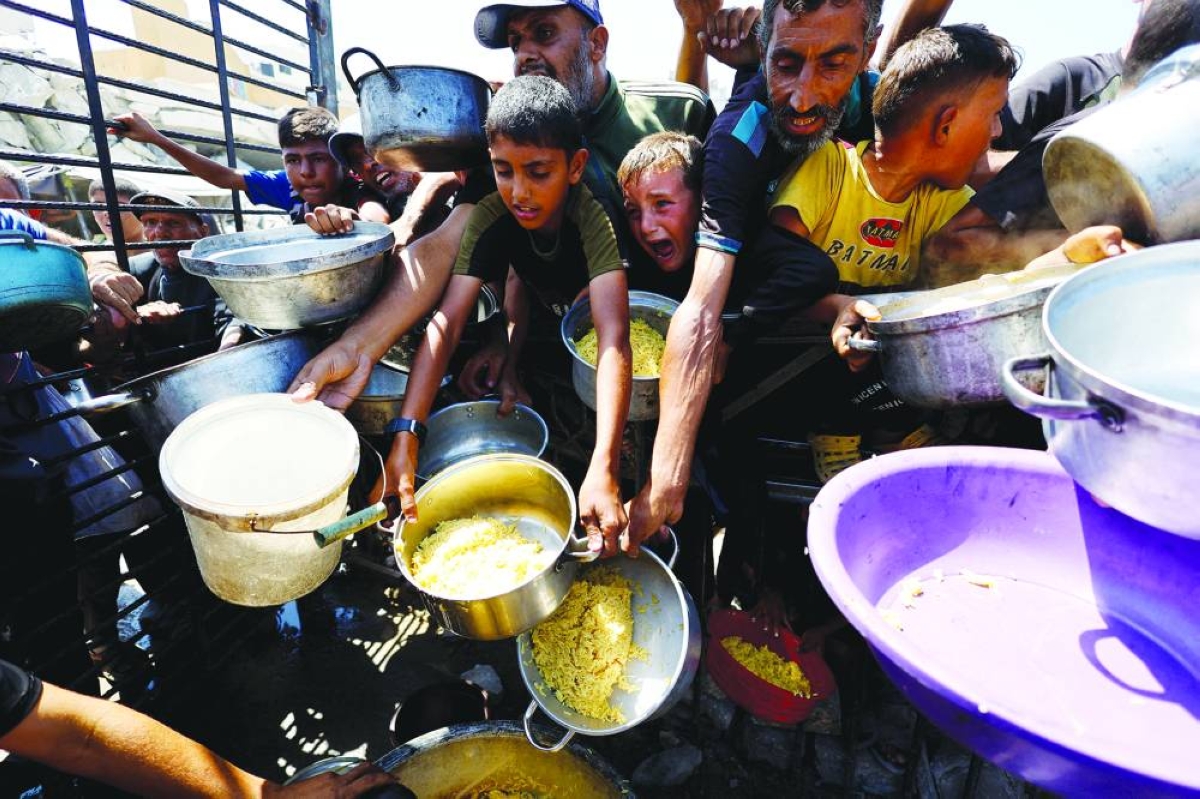
Conflict, drought and shrinking aid will keep global hunger at critical levels in 2026, with food insecurity expected to worsen in some of the world's most fragile countries, according to the 2026 *Global Report on Food Crises.
And two-thirds of people facing food crises globally last year lived in just 10 countries, with a third of them in Sudan, Nigeria and the Democratic Republic of the Congo (DR Congo), a UN-backed yearly report said yesterday.
Conflict remained the main driver of acute food insecurity, according to the report, based on data from the United Nations, the European Union and humanitarian agencies.
And with conflicts and climate extremes ‘likely to sustain or worsen conditions in many countries’, the outlook for 2026 is ‘bleak’, it said.
‘Acute food insecurity remains highly concentrated (in) 10 countries – Afghanistan, Bangladesh, the Democratic Republic of the Congo, Myanmar, Nigeria, Pakistan, South Sudan, Sudan, Syrian Arab Republic, and Yemen,’ the report said.
Improvements in some countries, such as Bangladesh and Syria, were ‘almost fully offset by notable deteriorations’ in Afghanistan, DR Congo, Myanmar and Zimbabwe, it said.
For the first time in the report, which is in its 10th edition, famine was confirmed in two separate contexts – in Gaza and parts of Sudan – in the same year.
In total, 266mn people in 47 countries and territories faced high levels of acute food insecurity in 2025, while 1.4mn people faced catastrophic conditions in parts of Haiti, Mali, Gaza, South Sudan, Sudan and Yemen.
In 2025 alone, 35.5mn children worldwide were acutely malnourished, including nearly 10mn suffering from severe acute malnutrition.
Looking at this year, the report said severity levels remained critical, with only Haiti expected to escape from the worst ‘catastrophic’ band thanks to a slight improvement in security and increased humanitarian aid.
It also warned about the sharp decline in international aid and said the Middle East war risked aggravating existing crises by increasing the numbers of displaced in a region already hosting millions of refugees, and driving up fertiliser costs.
The blocking of the Strait of Hormuz, a key oil supply route, has sent fertiliser prices soaring since they rely on oil-based inputs.
‘Now we're in planting season,’ Alvaro Lario, head of the UN's International Fund for Agricultural Development (IFAD), told AFP. ‘So for sure this current food shock – both with the energy prices going up and also fertilisers going up – I think it's going to have a massive impact in terms of production.’
He called for more help to small-scale farmers, for example by investing in water- and climate-resilient crops.
Crises could be eased by farmers producing fertiliser locally as well as improving soil health so that less of it is needed, he added.
Even before the added stress of this latest war, West Africa and the Sahel looked likely to remain under heavy pressure this year from conflict and persistent inflation, particularly in Nigeria, Mali, Niger and Burkina Faso.
Nigeria alone is projected to see one of the largest increases in food insecurity in 2026, with 4.1mn more people expected to face acute hunger.
In East Africa, failed rains across much of the Horn of Africa are expected to deepen suffering in Somalia and Kenya, where drought, insecurity, high food prices and reduced humanitarian aid are likely to drive worsening conditions.
The report also warned that humanitarian and development financing for food sectors in crisis fell sharply in 2025 and is projected to decline further.
Humanitarian food-sector funding is estimated to have dropped by some 39% last year from 2024 levels, while development assistance contracted by at least 15%.
The IFAD is also working on boosting investment by local private sectors.
‘Creating the instruments and incentives for the local private sector… is a very important way of making that sustainability and that development money go a longer way,’ Lario said.