admin
admin People uprooted by the war in Lebanon began returning to devastated towns and neighbourhoods on Friday, with many finding their homes destroyed or uninhabitable and hesitant to stay for fear a ceasefire between Hizbollah and Israel could unravel.
US President Donald Trump announced the 10-day ceasefire agreement between the governments of Lebanon and Israel on Thursday, adding to optimism that the parallel war between the United States and Iran could be nearing an end.
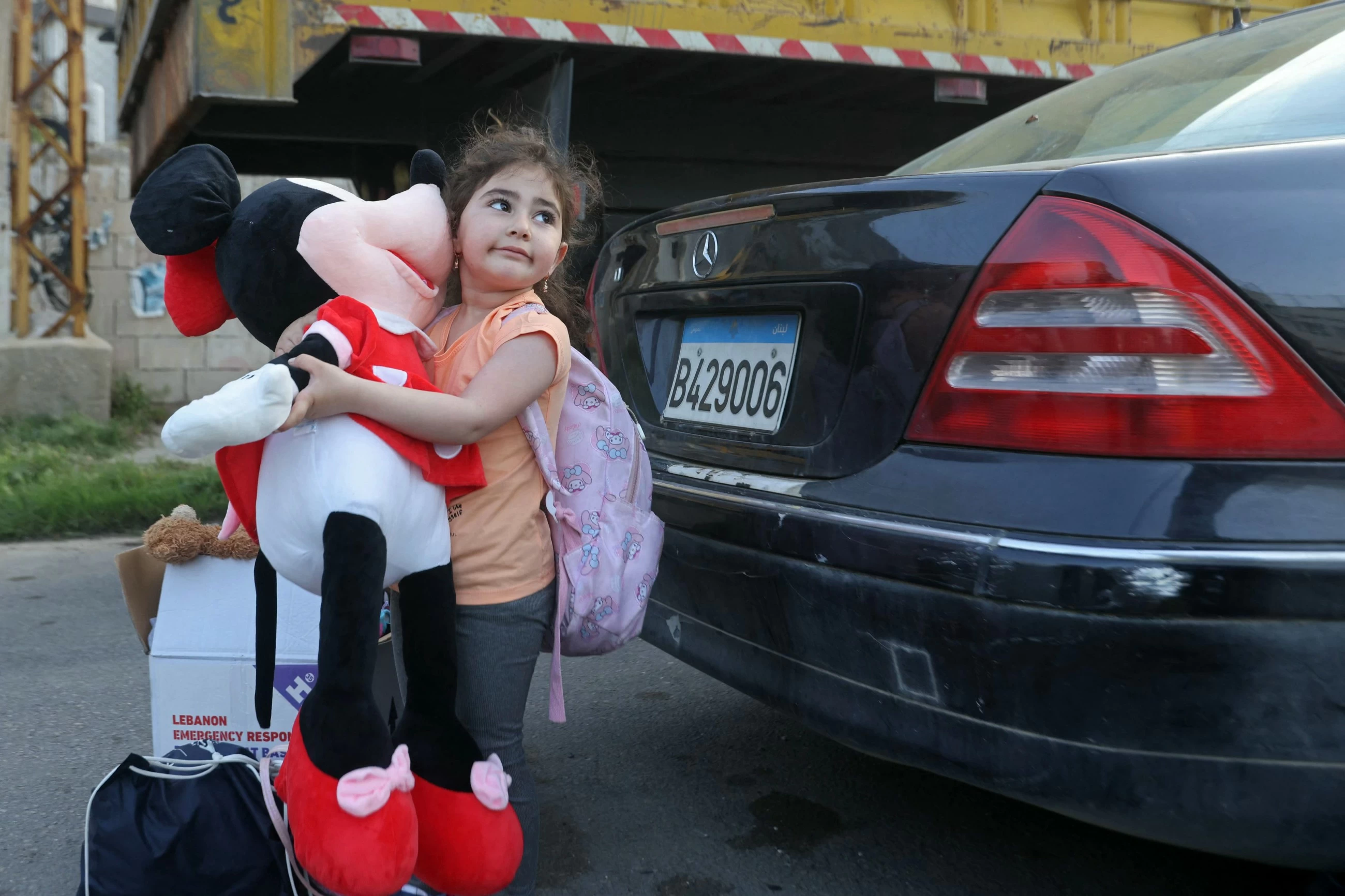
A displaced girl stands with her belongings as her parents prepare to travel back to their village home. AFP
While Trump says Lebanon and Israel will work towards a longer-term deal, the ceasefire leaves big questions. Notably, it does not demand Israel withdraw troops occupying parts of the south and Hizbollah, which operates independently of the Lebanese state, says it maintains “the right to resist.”
There was little sign of residents rushing back to Beirut’s Hizbollah-controlled southern suburbs, an area pummelled by Israel during more than six weeks of conflict that spiralled out of the war between the United States and Iran.
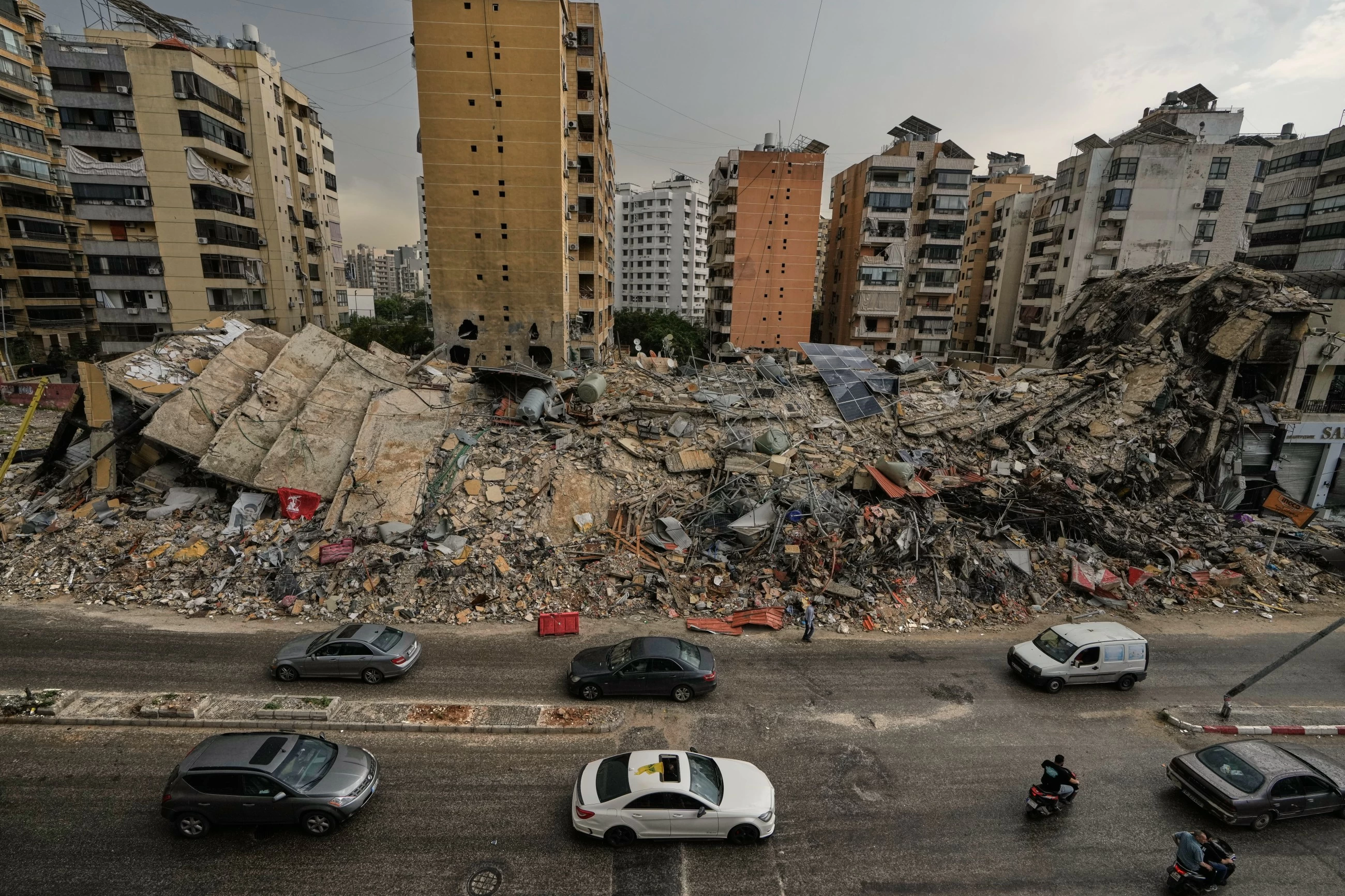
Residents drive past the rubble of destroyed buildings in Dahiyeh. AP
Vast mounds of rubble stood where there had once been apartment blocks.
Ali Hamza said he found his home intact but people were scared to return for now. “It is impossible to live in these circumstances, and with these smells. A full return is difficult now, despite the hardship of displacement”. He was gathering essentials from the house, including school books: “We lost everything; we don’t want them to lose the school year.”
CROSSING THE LITANI
In Qasmiyeh in southern Lebanon, cars were driving across a makeshift crossing over the Litani River, hastily erected after the ceasefire came into effect at midnight local time (2100 GMT). Israel destroyed all the bridges over the Litani during the war, blowing up the one at Qasmiyeh on Thursday.
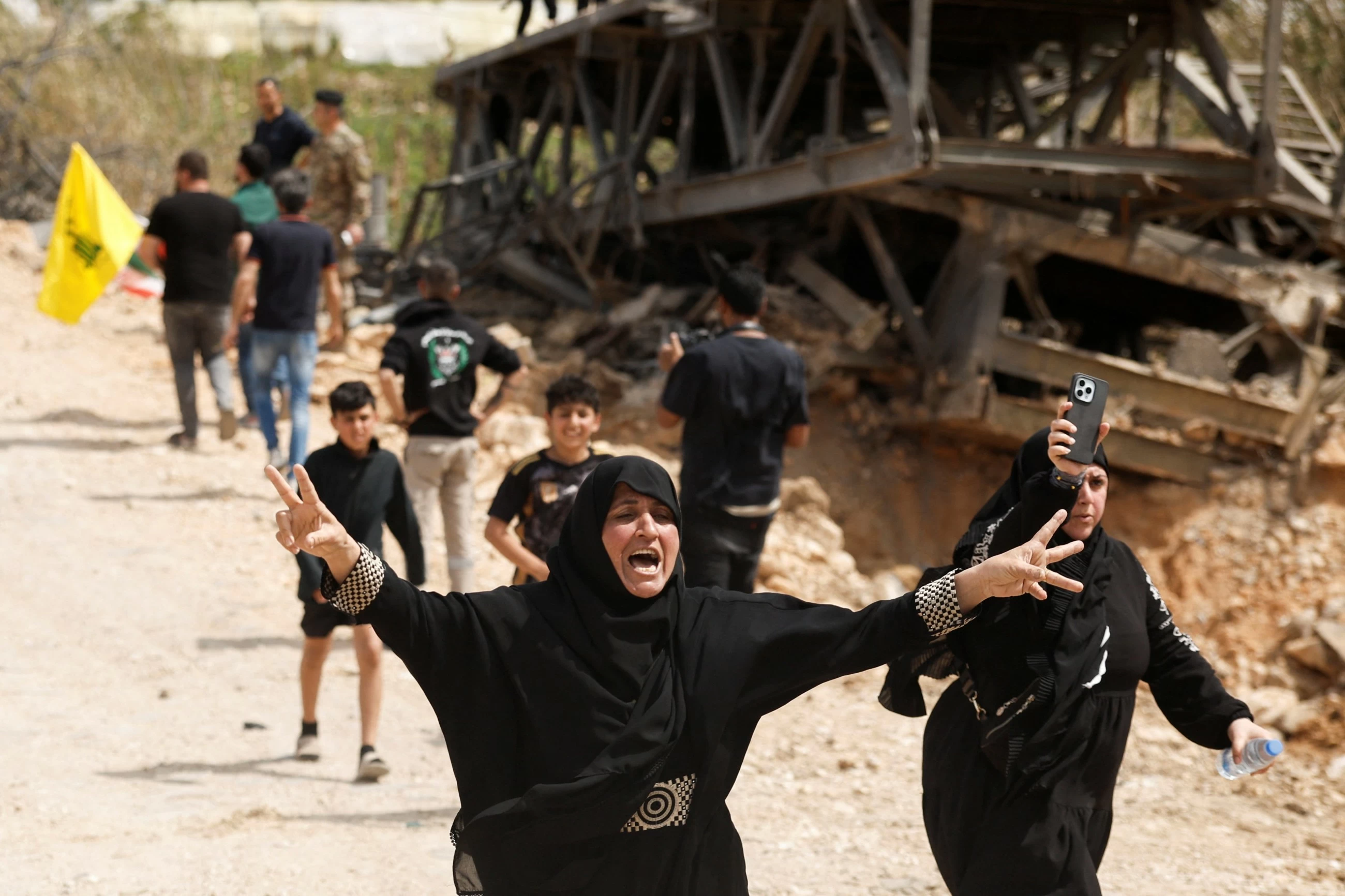
Women react as displaced people make their way back to their homes crossing the bridge linking southern Lebanon to the rest of the country. Reuters
“There’s destruction and it’s unliveable. Unliveable. We’re taking our things and leaving again,” said Fadel Badreddine, who was visiting the largely destroyed southern city of Nabatieh with his wife and son.
“May God grant us relief and end this whole thing permanently — not temporarily — so we can return to our homes and livelihoods.”
The war killed more than 2,100 people in Lebanon and forced some 1.2 million from their homes, according to Lebanese authorities.
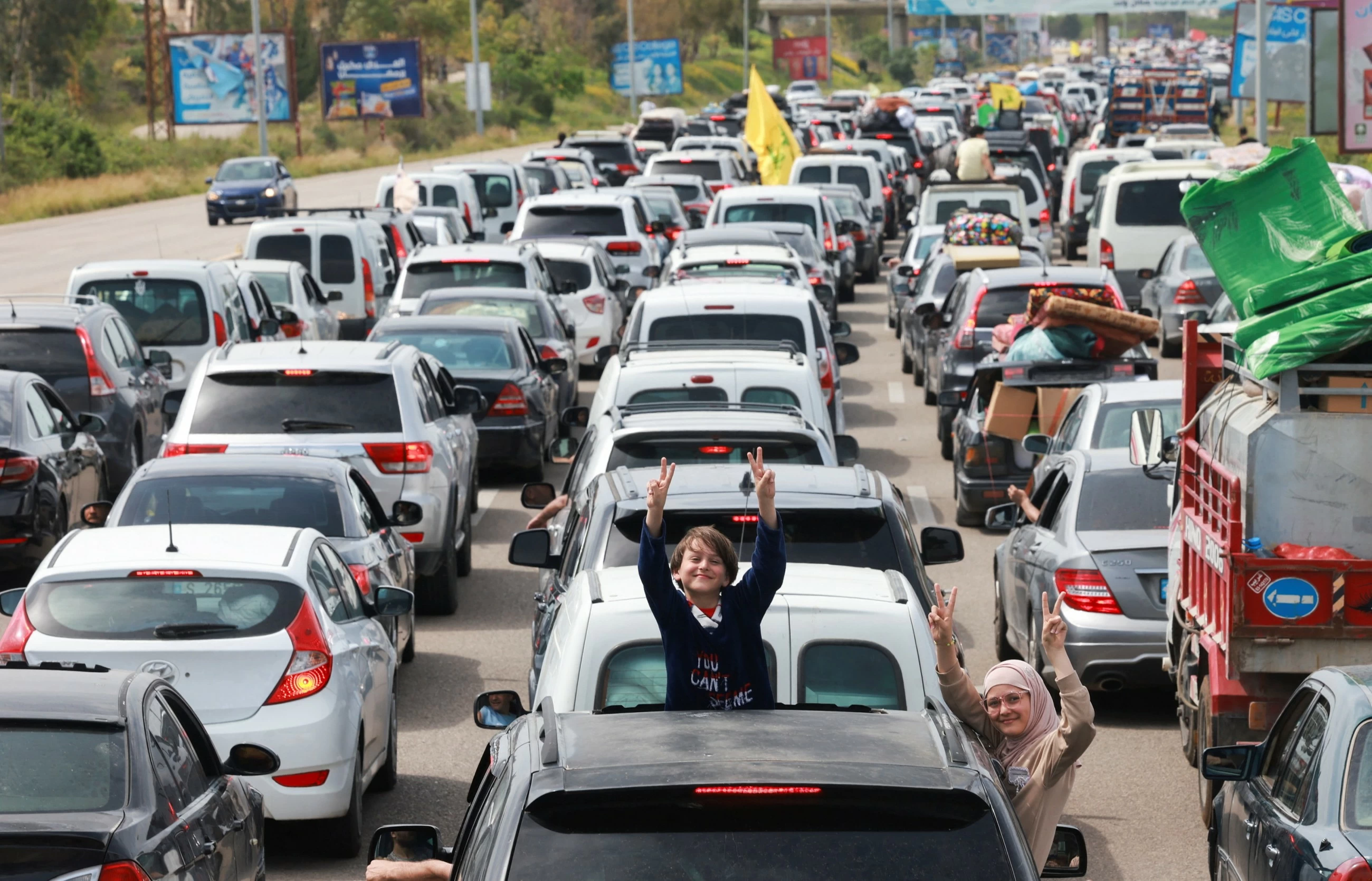
Children gesture from a vehicle as displaced people make their way to return to their homes after a 10-day ceasefire near Tyre, Lebanon. Reuters
Israel ordered residents out of swathes of the south, Beirut’s southern suburbs and other areas during the war. The bulk of the displaced are members of the Shiite community who also bore the brunt of a war in 2024 between Hizbollah and Israel.
Israel destroyed Lebanese villages in the south with the aim of creating a “buffer zone,” saying the aim was to protect northern Israeli towns from Hizbollah attacks.
Israeli Prime Minister Benjamin Netanyahu said he had rejected Hizbollah’s demand to withdraw forces from the south.
TRUMP SAYS LEBANON WILL ‘TAKE CARE OF HIZBOLLAH’
The Lebanese government, which has sought Hizbollah’s peaceful disarmament for a year, strongly criticised the group over its decision to open fire, banning its military activities.
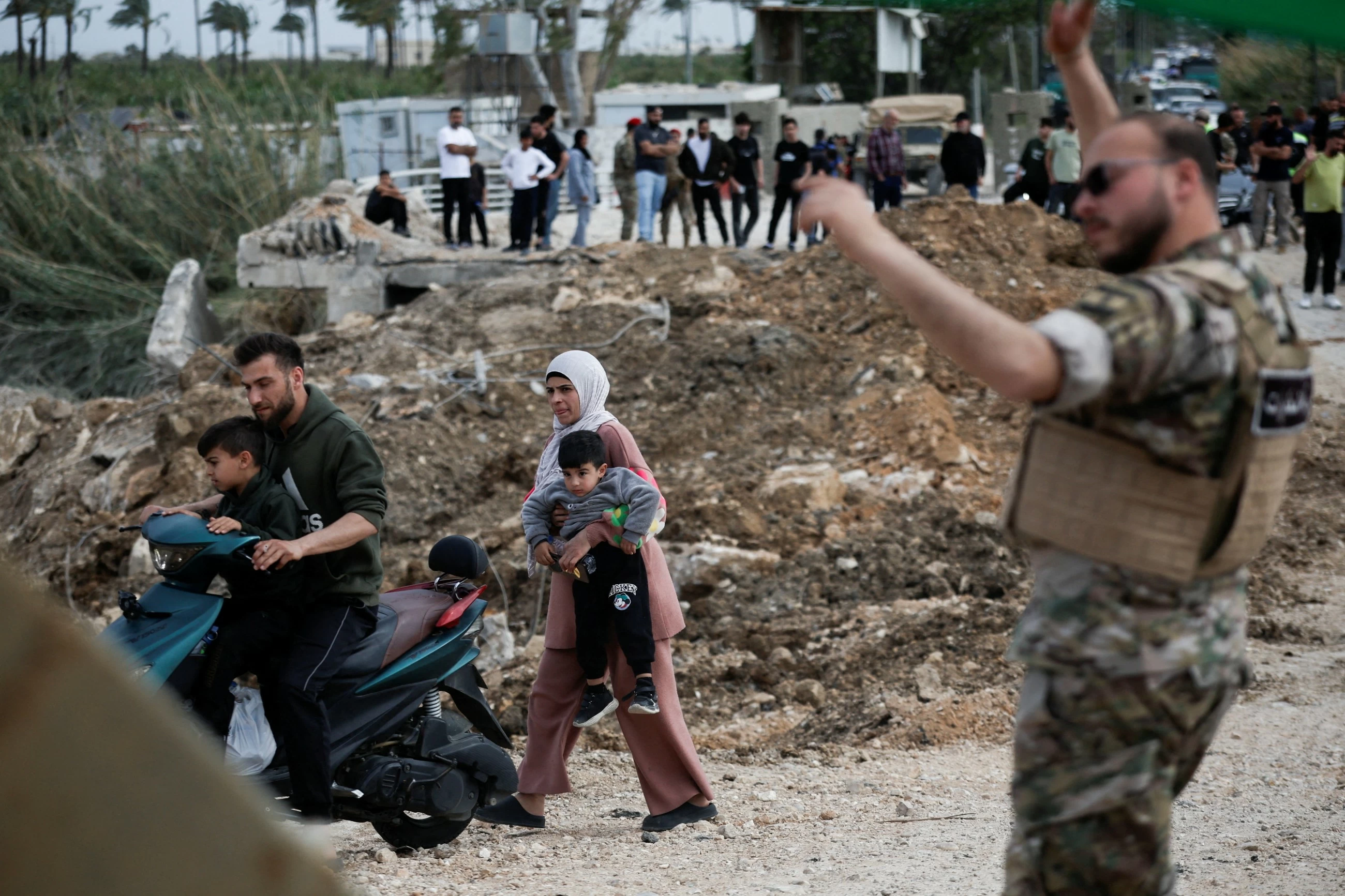
Displaced people make their way back to their homes in Qasmiyeh, Lebanon. Reuters
Lina Khatib, an associate fellow at the Chatham House policy institute in London, said it was likely there would be “a continuation of Israeli activity in southern Lebanon to bolster its objective of establishing a buffer zone.”
“Even if there are military infringements of the terms of the ceasefire, this will not necessarily mean abandoning the different stakeholders’ political commitment to the ceasefire terms,” she said.
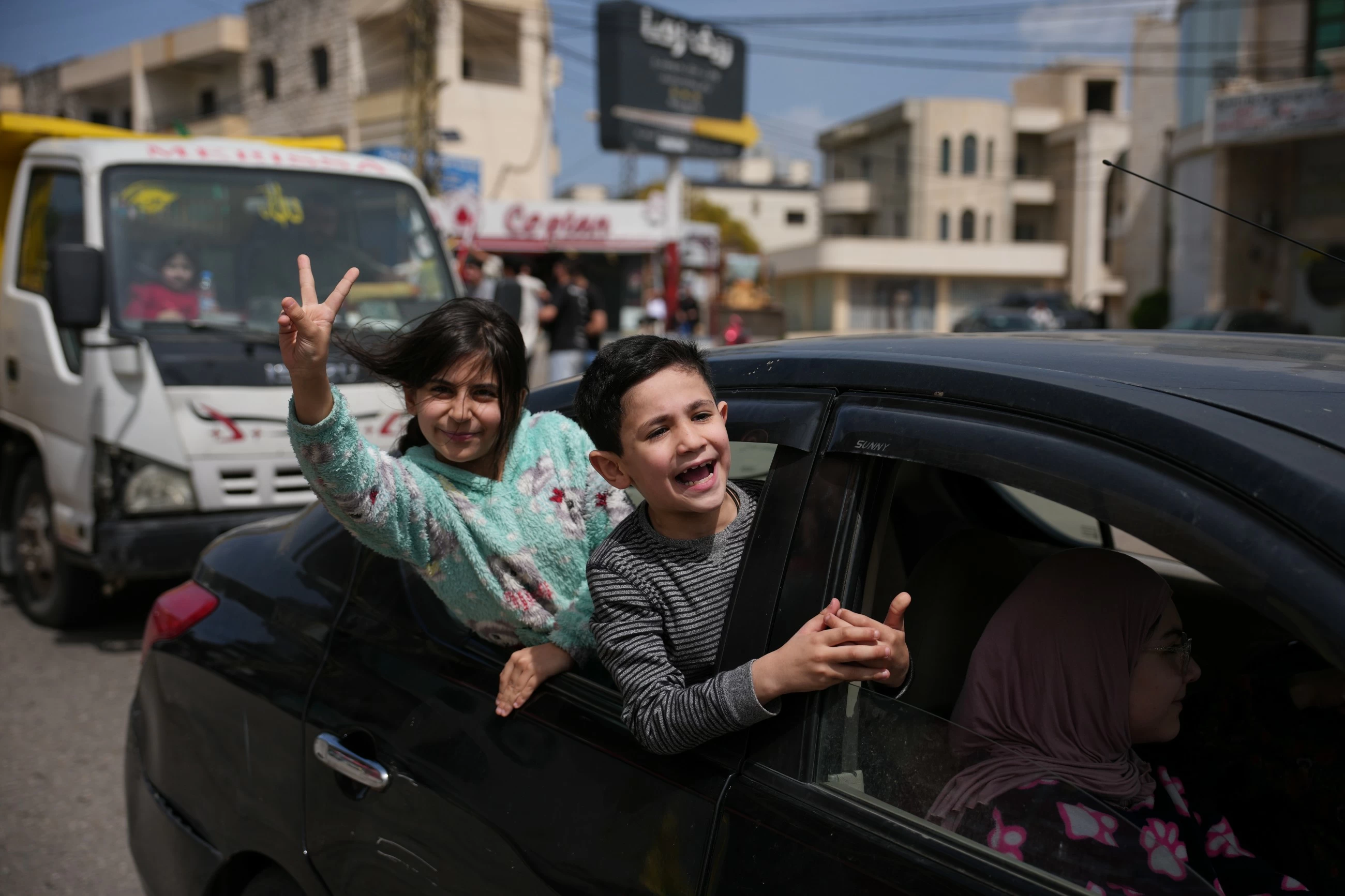
Displaced children celebrate as they return to their villages in Zefta, southern Lebanon. AP
The ceasefire agreement requires Beirut to take “meaningful steps to prevent Hizbollah” from attacking Israel, and says Israel preserves the right to “take all necessary measures in self-defense at any time, against planned, imminent, or ongoing attacks.”
Trump said Lebanon had agreed to “take care of Hizbollah.” Netanyahu said Israel’s main demand remained that Hizbollah must be dismantled.
Any move by the Lebanese state to disarm Hizbollah by force would risk conflict in a country shattered by civil war from 1975 to 1990. Attempts by a Western-backed government to curb Hizbollah in 2008 prompted a brief civil conflict.
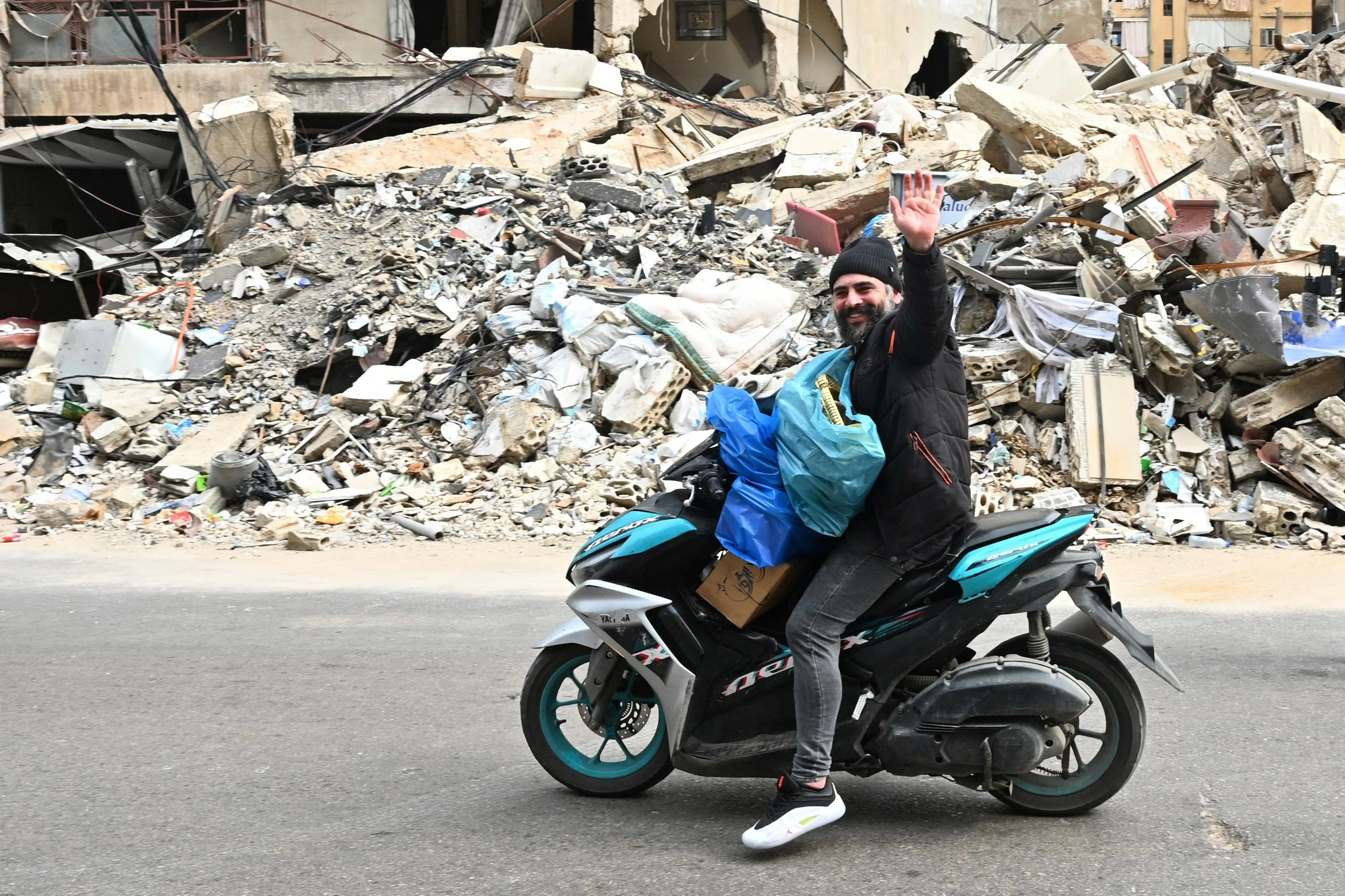
A man carrying some of his belongings rides a motorcycle past destruction as Lebanese residents return to their neighbourhood. AFP
Trump said he would be inviting Netanyahu and Lebanese President Joseph Aoun to the White House for “meaningful talks” between the two countries, which have technically remained in a state of war since Israel was established in 1948.
The Lebanese army reported ceasefire violations by Israel, including intermittent shelling of several southern Lebanese villages, and urged citizens to hold off on returning to southern villages and towns.
There was no immediate comment from the Israeli military.
Reuters