admin
admin 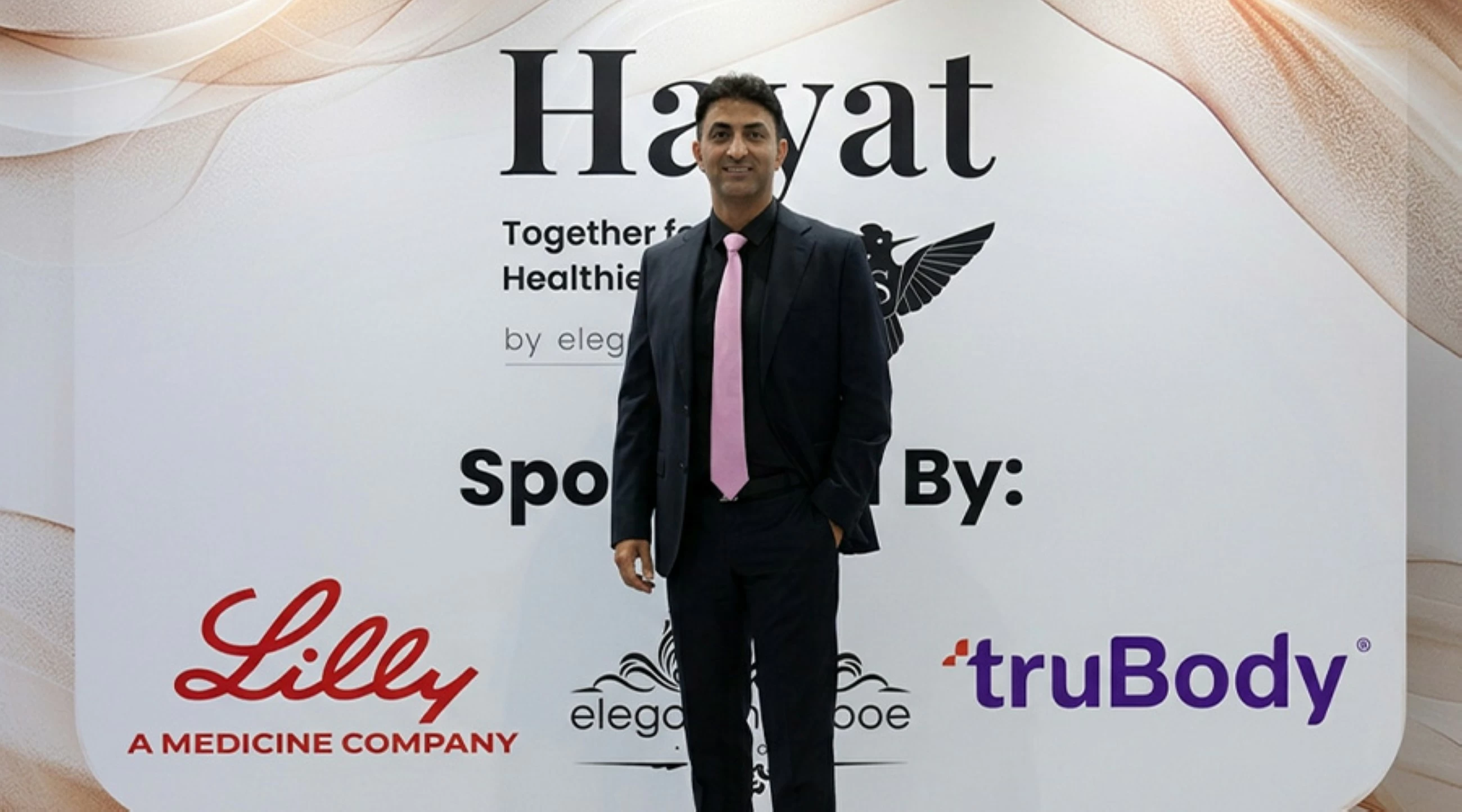
A new public health initiative titled “Hayat” has been launched in Dubai, bringing together global expertise across pharmaceutical research, body composition technology, and clinical practice in a structured effort to enhance public understanding of obesity.
The three-month initiative is supported by Eli Lilly, a global pharmaceutical leader, and True Body USA, a provider of FDA-cleared body contouring technologies including TruSculpt iD and TruSculpt Flex. Clinical program design and execution are led by Elegant Hoopoe, a Dubai-based healthcare group with extensive operational experience in metabolic health management.
The initiative is designed and directed by Shahriar Shahir Barzegar, founder of hoopoe holding, who has spent the past two years working closely within evolving metabolic treatment frameworks in the UAE. His work has focused on translating clinical practice into structured, system-based approaches that can be communicated to the public in a responsible and medically grounded manner.
Positioned as a non-commercial initiative, “Hayat” is centered entirely on public education. It does not promote specific products or treatments, but instead addresses obesity as a complex, chronic condition requiring long-term, structured management under appropriate medical supervision.
Globally, obesity continues to represent a significant healthcare challenge, affecting an estimated one billion individuals. At the same time, advances in clinical research have contributed to a broader shift in how obesity is understood, moving beyond simplified models toward more integrated, multi-dimensional frameworks of care.
“Over the past two years, a consistent pattern has emerged,” said Barzegar. “When obesity is approached without structure, outcomes tend to be temporary. Sustainable progress depends on continuity of care, clinical supervision, and a system that addresses the condition from multiple dimensions.”
The “Hayat” initiative is built around this perspective. Over a three-month period, it will deliver evidence-based educational content covering the biology of obesity, metabolic adaptation, behavioral factors, and the importance of maintaining physiological balance during weight management.
Any discussion related to pharmacological interventions will be conducted strictly within a clinical setting, under physician guidance and following appropriate consultation, ensuring alignment with responsible medical practice.
Emerging clinical insights have also highlighted the importance of long-term continuity in obesity management, reinforcing the need for structured, medically supervised pathways rather than fragmented or short-term approaches.
By aligning scientific research, advanced body composition technologies, and clinical expertise within a unified framework, the initiative reflects an evolving global shift toward system-based models of care.
As Dubai continues to strengthen its position as a hub for healthcare innovation, initiatives such as “Hayat” demonstrate a growing emphasis on evidence-based public engagement and the responsible communication of medical knowledge.