admin
admin 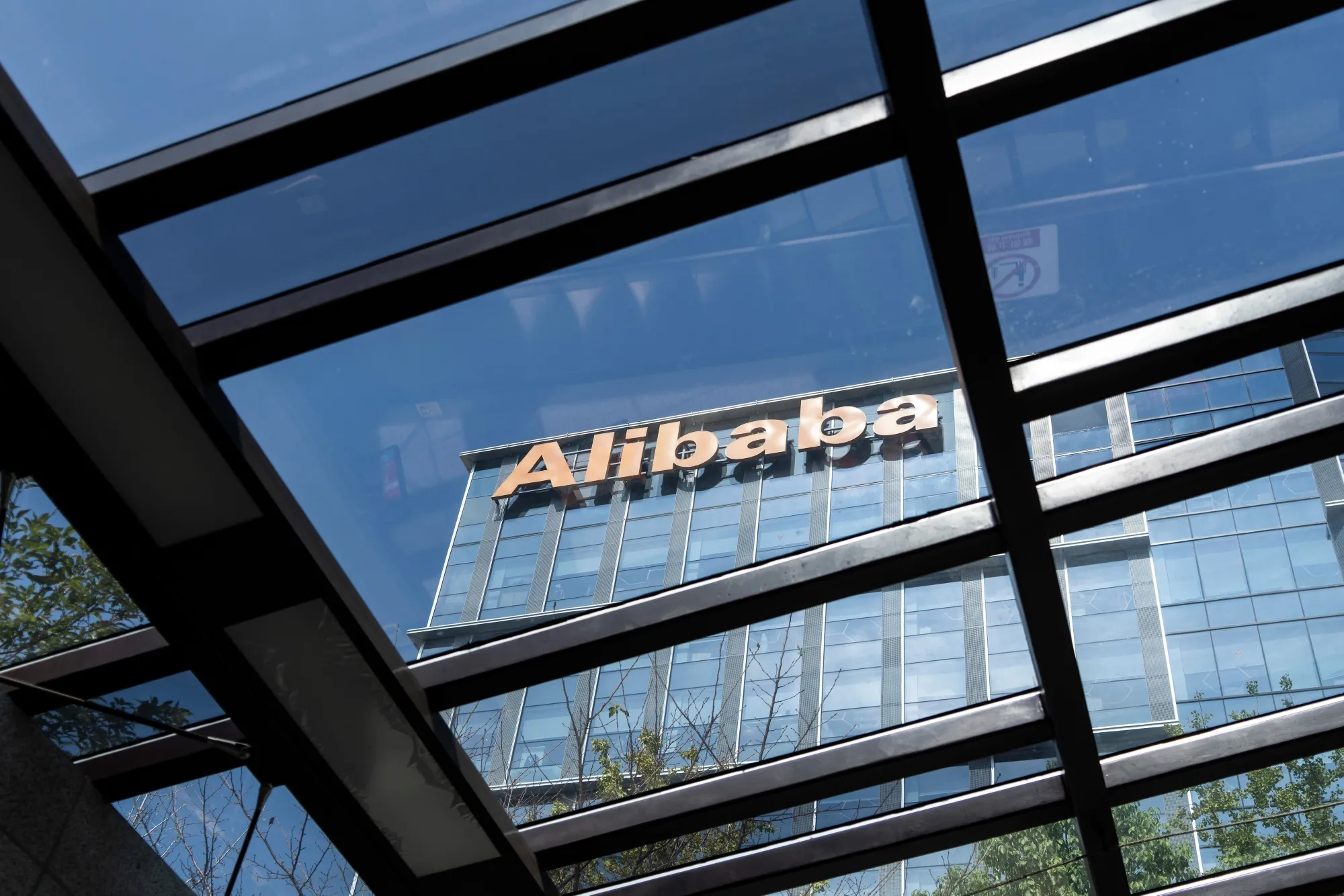
Alibaba Group Holding has unveiled a new artificial intelligence model aimed at building 3D environments and interactive video, widening its challenge to Tencent in one of the most commercially sensitive corners of China’s technology market: games, cloud services and creator tools. The model, called Happy Oyster, was introduced on Thursday as a “world model”, a system designed to generate explorable digital scenes rather than only short clips, according to Bloomberg’s report on the launch.
The move matters because it shifts Alibaba’s AI push further beyond chatbots and business software into territory where Tencent has long had structural advantages. Tencent remains the country’s biggest gaming company and has been investing heavily in AI tools that can support game design, advertising and cloud products. Reuters reported in March that Tencent had pledged higher AI spending for 2026 after posting stronger revenue, with gaming and expanding AI services helping drive growth.
Bloomberg said Happy Oyster can create 3D settings and interactive videos, suggesting Alibaba is trying to compete not only in video generation but also in simulation-style systems that may have uses in game development, virtual production and digital training. A world model, in industry terms, attempts to simulate how an environment evolves and responds to actions rather than merely outputting a passive sequence of images. Google DeepMind, describing the category earlier this year, said such models simulate the dynamics of an environment and predict how actions affect it.
That framing places Alibaba closer to the next phase of generative AI competition. Until now, much of the public contest has focused on text, still images and text-to-video. World models promise something more useful for developers: controllable spaces, persistent environments and interactive scenes that can be adapted for games or simulations. Academic and industry research over the past year has increasingly described video generators as stepping stones towards broader world simulators.
Alibaba has been building toward this point for months. Reuters reported in February 2025 that the company made its Wan 2.1 video and image generation model open source, intensifying competition in AI. Alibaba Cloud and Alibaba Group statements later expanded that effort with Wan 2.1 variants for video creation and editing, while the company also committed at least 380 billion yuan over three years to cloud and AI infrastructure. That spending plan, worth about $52 billion to $53 billion, underlined that the group sees AI as a central growth engine rather than a side project.
Tencent, however, is not standing still. Reuters reported in March 2025 that it released open-source tools capable of turning text and images into 3D visuals, one of the clearest signs that the battle for next-generation content creation in China is moving towards immersive media. Company materials released with Tencent’s annual results also said multimodal AI is being used to support more realistic non-player characters, player coaching and stronger game engagement.
For Alibaba, the strategic appeal is obvious. A successful world model could strengthen Alibaba Cloud’s appeal to game studios, film producers, advertisers and industrial clients that need synthetic environments for testing or training. It could also help the company tie together its model business, cloud computing arm and entertainment ambitions. Bloomberg’s reporting over the past week has shown Alibaba becoming more assertive in AI video, first with the emergence of HappyHorse-1.0 at the top of benchmark rankings and now with Happy Oyster’s expansion into interactive 3D generation.
Yet the commercial promise comes with limits. Benchmarks and product demonstrations do not always translate into mass adoption. Video and world-generation systems remain expensive to train and serve, and the industry still faces unresolved issues around copyright, safety, accuracy and misuse. Research published in 2025 has also warned that high-quality simulated video can make synthetic media harder to detect, raising fresh questions for regulators, platforms and newsrooms.