admin
admin Pakistan’s Prime Minister Shehbaz Sharif said he met with the Saudi Crown Prince Mohammed Bin Salman in Jeddah, before a possible second round of US-Iran peace talks.
Iran has targeted US allies in the Gulf — including Saudi Arabia and Qatar, which Sharif is also visiting — in retaliation for US-Israeli strikes on Tehran that triggered the war.
“I reiterated Pakistan’s firm commitment to advancing its efforts to encourage both the US and Iran towards an agreement aimed at lasting peace and stability in the region,” Sharif posted on X.
Iran warns US ships, soldiers
Hardliner Mohsen Rezaei, a top military adviser to Iran’s supreme leader Mojtaba Khamenei, warned Wednesday that Iran would take ground-invading US forces hostage and sink American ships enforcing a military blockade in the Strait of Hormuz, a critical shipping waterway for oil, gas and other Gulf exports.
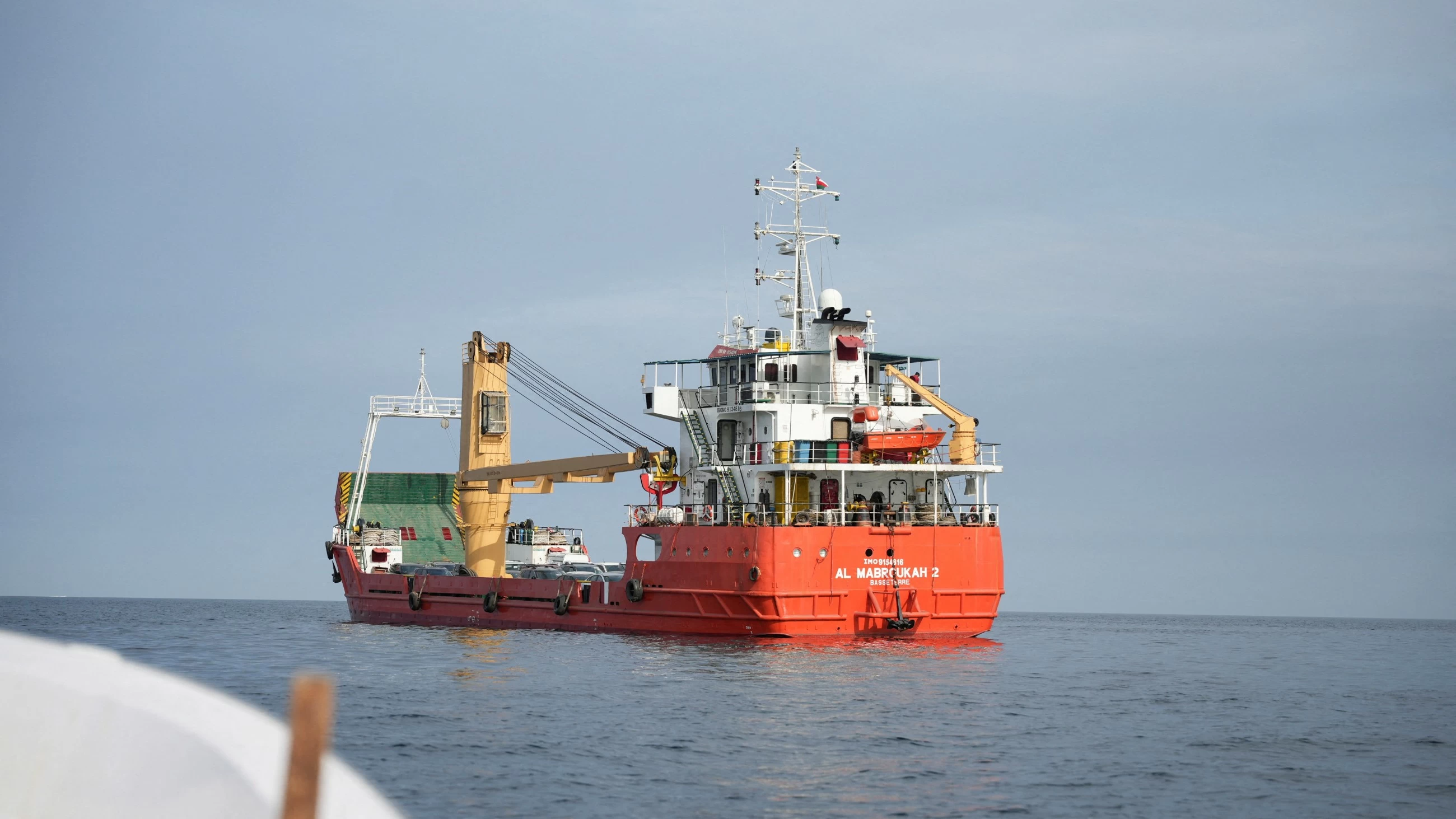
A vessel at the Strait of Hormuz, off the coast of Oman’s Musandam province, on Sunday. Reuters
Battleships in the US armada “can definitely be exposed to our missiles, and we can destroy them”, Rezaei, a former commander-in-chief of Iran’s Revolutionary Guards who was named as a military adviser by Khamenei last month, told state TV.
Rezaei added it would be “great” if Washington launched a ground invasion of Iran, as “we would take thousands of hostages, and then for each hostage we would get a billion dollars”.
Fresh oil sanctions
United States officials issued new sanctions against Iran, targeting more than two dozen people involved in oil transport, along with companies and tankers that operate within the network of petroleum shipping magnate Mohammad Hossein Shamkhani.
“Treasury is moving aggressively with ‘Economic Fury’ by targeting regime elites like the Shamkhani family that attempt to profit at the expense of the Iranian people,” US Treasury Secretary Scott Bessent said in a statement.
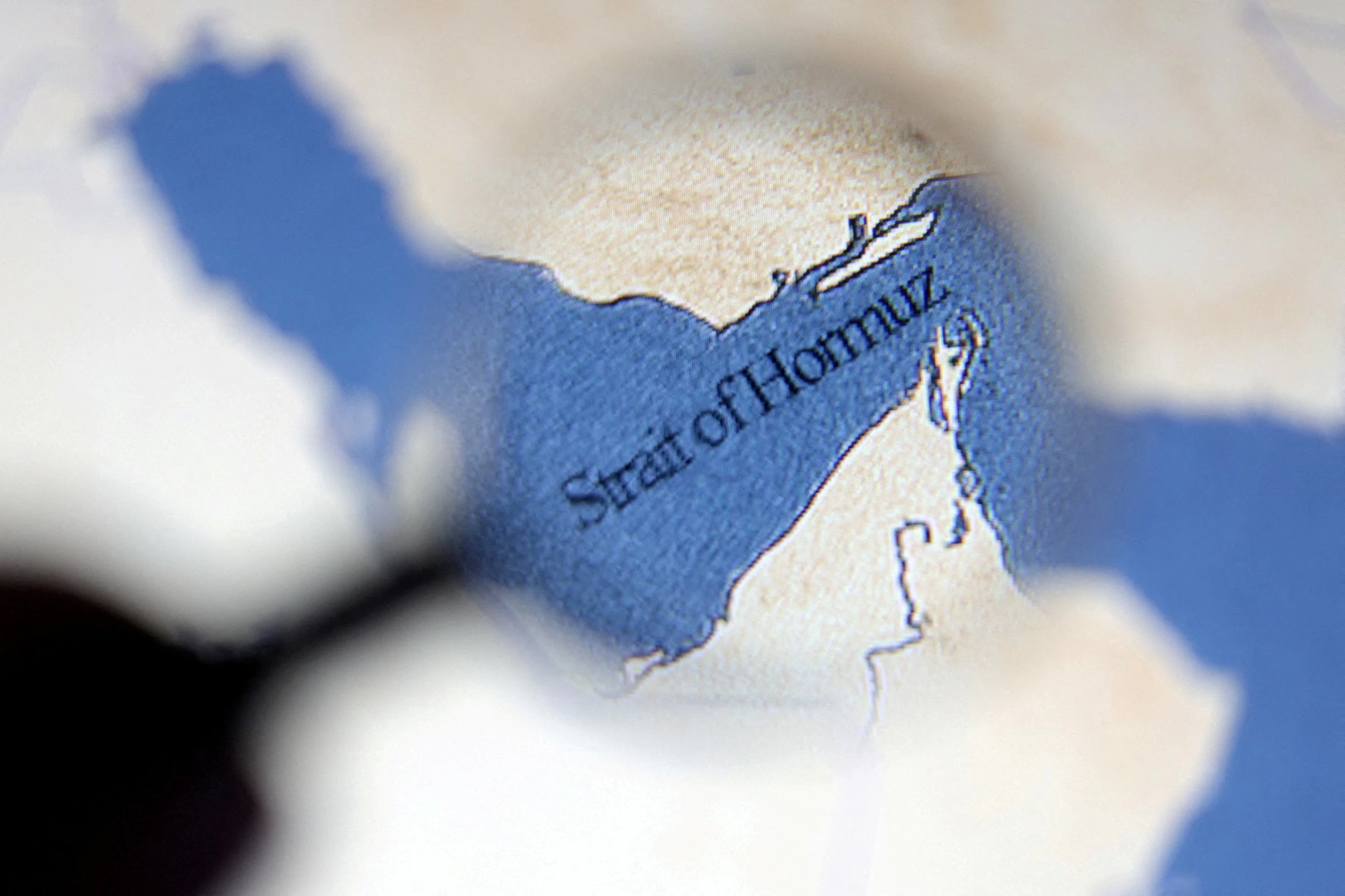
A map showing the Strait of Hormuz is seen in this illustration. Reuters
Shamkhani is the son of security official Ali Shamkhani, an advisor to Iranian supreme leader Ali Khamenei, both of whom were killed February 28, the first day of US-Israeli attacks and the start of the Middle East war.
Growing hunger fears
The conflict in the Middle East could push millions more toward hunger as its economic fallout reverberates around the globe, the World Bank’s chief economist told AFP.
“You have about 300 million people who suffer from acute food insecurity already,” Indermit Gill said. “That’ll go up by about 20 percent very, very quickly” as knock-on effects grow.
Stock markets soar
Japanese stocks hit a record high as Asian equities extended the week’s rally Thursday on heightened optimism the United States and Iran will extend their ceasefire for further talks to end their war and reopen the Strait of Hormuz. Major Wall Street stock indices finished at record highs Wednesday.
Japanese stocks hit a record high as Asian equities extended the week’s rally Thursday on heightened optimism the United States and Iran will extend their ceasefire for further talks to end their war and reopen the Strait of Hormuz. Major Wall Street stock indices finished at record highs Wednesday.
Round two of talks
The United States is discussing holding a second round of peace talks with Iran and is optimistic about reaching a deal, the White House said.
Press Secretary Karoline Leavitt told reporters that further talks “would very likely” be in Islamabad.
China supports ‘momentum’ of peace talks
China’s Foreign Minister Wang Yi told his Iranian counterpart that Beijing “supports maintaining the momentum of the ceasefire and peace talks”.
US says it blocks 10 vessels from Iran ports
The US military’s Middle East command CENTCOM said it had stopped 10 vessels from sailing out of Iranian ports during the first 48 hours of a naval blockade against the Islamic republic.
But ship tracking data indicated at least three ships sailing from Iranian ports crossed the Strait of Hormuz, though some vessels taking the route later turned back.
Agence France-Presse