admin
admin 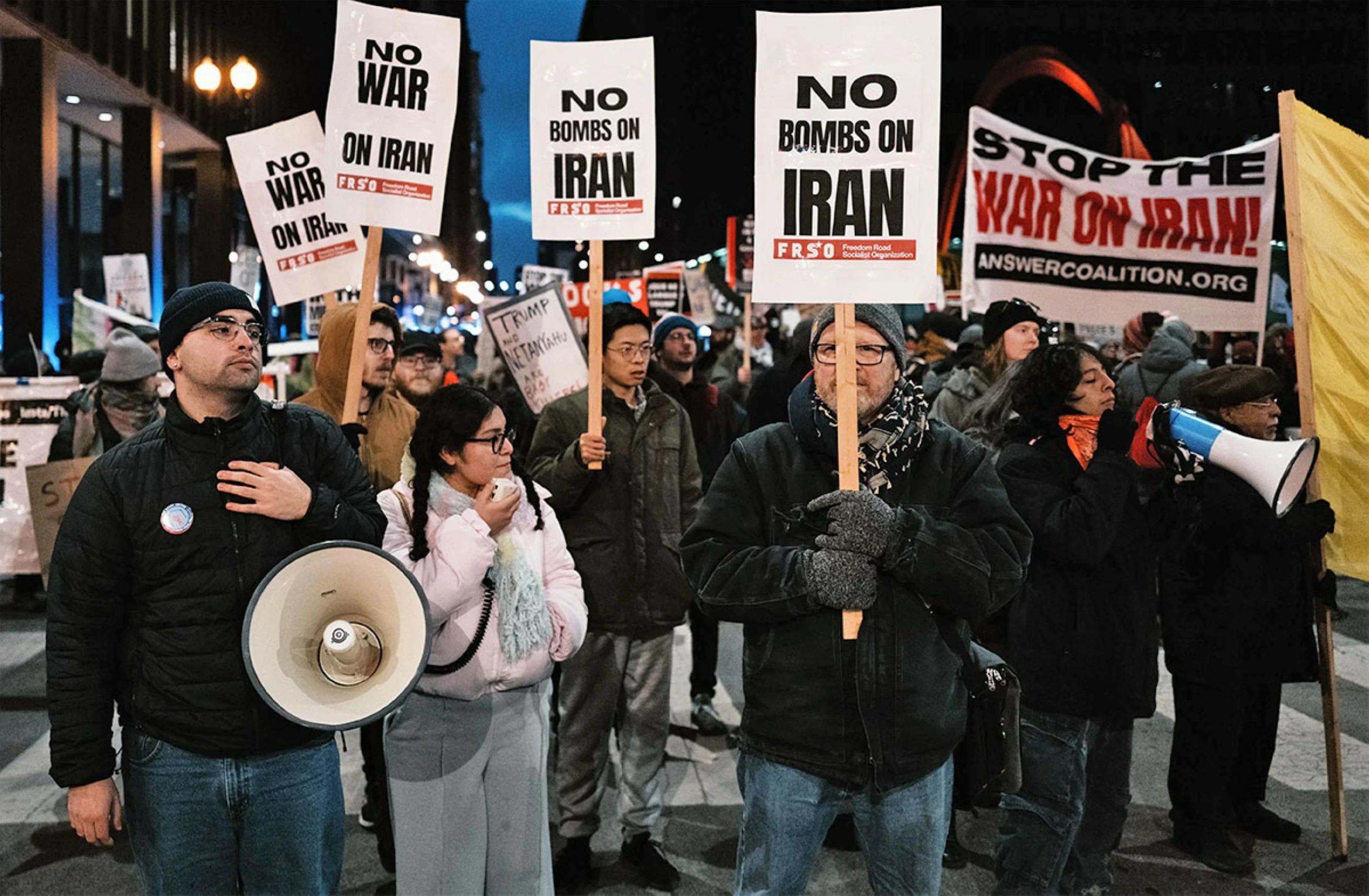
More than 100 US international legal experts and academics have been cited by the “Just Security” website as ruling that the war waged on Iran by the United States and Israel is a “clear violation of the United Nations Charter.” The experts also argue that the conduct of US forces and statements made by senior government officials “raise serious concerns about violations of international human rights law and international humanitarian law” and could constitute war crimes. The experts hold that the use of force against another state is permitted only “in self-defence against an actual or imminent armed attack or where authorized by the UN Security Council. The Security Council did not authorize the attack. Iran did not attack Israel or the United States.”
The experts castigated strikes on civilians and “political leaders who have no military role” as well as civilian infrastructure, including oil and gas installations, water and desalination plants. On March 19, UN High Commissioner for Human Rights Volker Türk was cited as condemning “strikes on energy infrastructure, noting their “disastrous” impacts for civilians. Concern was expressed about strikes on schools, health facilities, and homes. The Iranian Red Crescent reported that “67,414 civilian sites have been struck, of which 498 are schools and 236 health facilities.” A report by leading civil society organisations found that at least 1,443 Iranian civilians, including 217 children, were killed by US and Israeli forces between February 28 and March 23. Early this month the toll was updated to 2,076 and 26,500 wounded.
US Secretary of War Pete Hegseth has violated international law by saying “no quarter” to US enemies would be given and that the US does not abide by “stupid rules of engagement” while Donald Trump said, “I don’t need international law” and could conduct strikes on Iranian sites “just for fun.”
Human Rights Watch executive director Philippe Bolopion warned against flouting the system which is meant to “curb the barbarity of war.” He said that leaders who repudiate the “laws of war today may think they will gain from a world without rules, where brute force settles every question and all civilian harm is just written off as collateral damage. But by dismissing the principle of nonreciprocity, which makes clear that one side’s violations do not justify noncompliance by the other, they have spurred rounds of tit-for-tat strikes that put their own troops as well as their civilian populations in harm’s way.”
Trump has also alienated politically knowledgeable US citizens by targeting leading Iranian figures whether or not involved in the conduct of the war. While the US launched the conflict with the assassination of Iran’s supreme leader Ayatollah Ali Khamenei and members of his entourage, Washington has struck individuals who favour negotiations and conciliation. Among them was former foreign minister Kamal Kharazi who was gravely wounded and his wife killed in a strike on his Tehran home. As head of Iran’s foreign affairs council, Kharazi advised Khamenei and his son Mojtaba and has recently joined Pakistan in an effort to organise a meeting involving senior Iranian officials and US Vice President J D Vance with the aim of ending the war. Last week, Kharazi was quoted as saying Iran had not rejected negotiations and was open to indirect talks with the US although he complained that Trump had previously held negotiations while striking Iran.
Approval-hungry Trump has lost the backing for this war from the US public. Five recent opinion surveys conducted among 10,000 people show that nearly six in ten oppose the conflict, according to a Washington Post analysis of the polls. A Pew Research Centre poll in mid-March found 59 per cent of respondents said they believed the US made the “wrong decision in using military force in Iran,” while a Fox News poll found 58 per cent oppose “the current US military action against Iran.” Trump will not worry about the PEW poll because PEW is a neutral, professional outfit, but the poll conducted by right-wing Fox could give him cause for concern.
Tehran demonstrated its refusal of last Thursday’s US request for a 48-hour ceasefire by intensifying strikes. While official US sources explained the request by saying that the Trump administration had miscalculated Iran’s ability to defend itself and inflict punishment on US regional interests. Trump had joined Israel in launching the war in the belief that Iran would be defeated after four or five days. Instead, the war has lasted five weeks and is continuing. For the Iranian regime survival is at stake while Trump can simply halt the war and claim victory as the war has weakened the country’s armed forces, destroyed its navy, and consumed its missiles and drones. However, as long as the war carries on, the greater will be the destruction of Iran’s civilian infrastructure in violation of international law and humanitarian law. This does not bode well for small and medium sized states which rely on global lawfare for protection from bullies, both humans and states.