-
 admin
admin
-
February 27, 2026
-
1
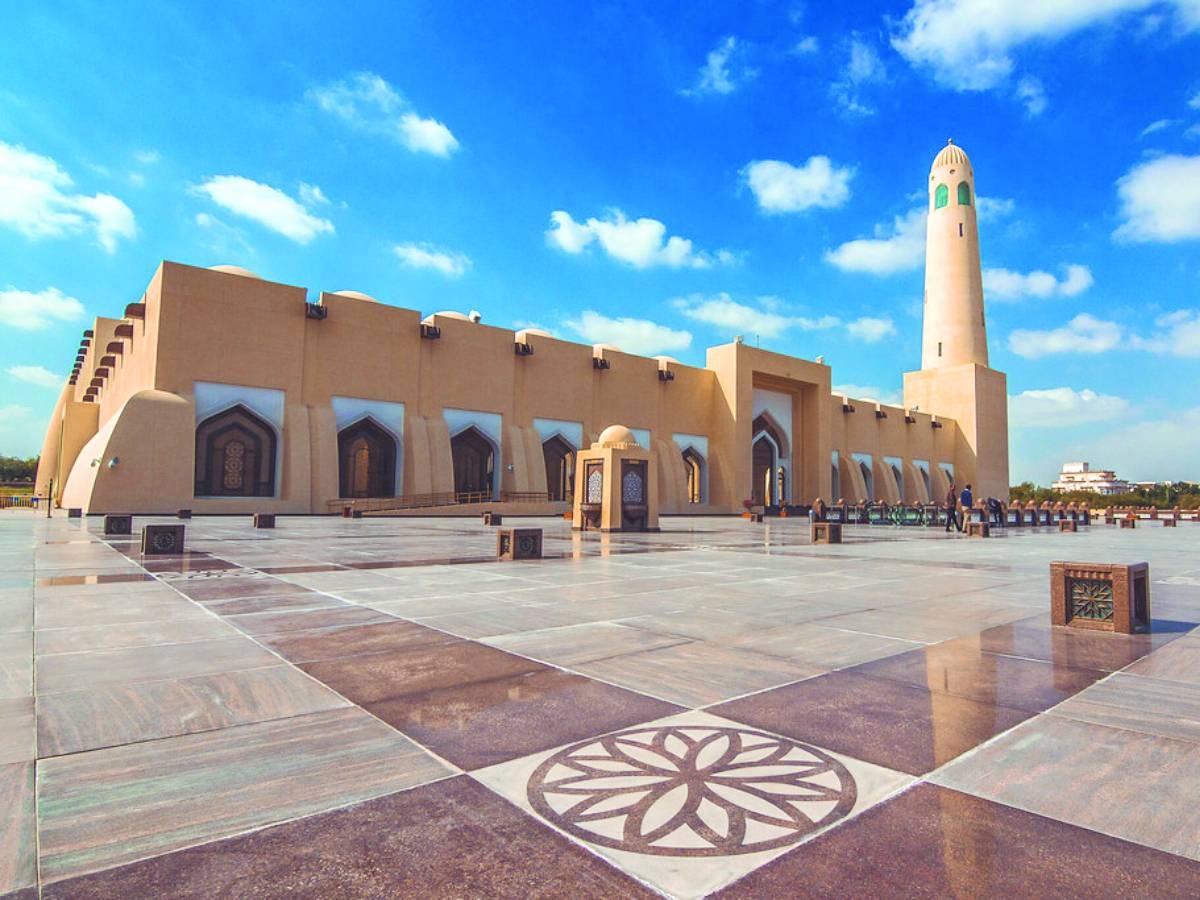
In Islam, the mosque plays a fundamental role as a comprehensive institution for worship, spiritual purification, raising awareness, promoting religious and moral values, and strengthening community bonds. Historically, its role has not been limited to performing rituals; it has also served as a space for learning, disseminating knowledge, and engaging in dialogue, contributing to human development and refining religious and social awareness. In this context, Qatar has given special attention to mosques in terms of planning, construction, and equipping them, as well as developing their functional role to become centres of learning and beacons of cultural influence. The State has ensured that mosques fulfill integrated roles, combining worship, education, and cultural enrichment, reflecting a comprehensive vision that enhances the mosque’s presence in the daily life of the community. Today, mosques in Qatar, in addition to their religious role, have become platforms for lectures and cultural seminars, spaces for discussing pressing social issues, and venues for activities aimed at children and youth, contributing to the consolidation of Islamic values, building awareness, and strengthening social cohesion. Several leading examples exemplify this integrated role, including the Imam Muhammad bin Abdul Wahhab Mosque, one of the key religious landmarks in the country. Inaugurated in December 2011, it is one of the largest religious projects completed and serves as a destination for worship and learning. It embodies the mosque’s significance in Qatar’s vision, as a comprehensive institution fulfilling religious, educational, and social roles. It also reflects the State’s commitment to preserving Islamic heritage and authentic architectural identity. Qatari architectureThe Imam Muhammad bin Abdul Wahhab Mosque is distinguished by its design, inspired by traditional Qatari architecture, particularly the historic Al Qubaib Mosque, while incorporating modern elements for contemporary use. Spanning a vast area, it can accommodate tens of thousands of worshipers and features courtyards, arcades, and multiple domes that reflect the aesthetics of Islamic architecture. The mosque also includes Qur’an memorization facilities, libraries, and lecture halls, in addition to hosting major religious events. This reinforces its role as a religious and educational centre that contributes to the dissemination of knowledge and the consolidation of Islamic values. Furthermore, Al-Mujadilah Center and Mosque for Women serves as a distinguished example of a mosque’s role in intellectual discourse and community dialogue, drawing inspiration from the story of the female companion Khawla bint Tha’labah, whose story is immortalized in the Qur’an in Surah Al-Mujadila. The mosque provides a platform to enhance the presence of Muslim women in the fields of science and knowledge, offering a suitable educational and research environment. The centre aims to empower women through research and educational programs, intellectual initiatives, and specialized workshops, contributing to raising awareness and presenting a practical model for applying Islamic values in contemporary life. The Al-Mujadilah Mosque hosts community events and open dialogues, creating a space that combines worship and knowledge, and affirming that mosques in Qatar have become vibrant institutions serving all segments of society. Among the most prominent religious and cultural landmarks is the Katara Mosque, distinguished by its unique architectural design. This design, created by the Turkish architect Zeynep Fadiloglu in collaboration with restoration experts from Istanbul, lends the mosque a distinctive artistic character. The mosque, located in the Katara Cultural Village, is known for its distinctive blue colour, achieved through the use of glass mosaics and hand-carved tiles. Its design blends elements of classical Islamic architecture with exquisite artistic embellishments, making it one of the most beautiful mosques in the country and a popular destination for visitors as well as worshipers. The Katara Mosque plays both a religious and cultural role. It showcases the rich heritage of Islamic arts and reflects the cultural diversity of the Islamic world, while also serving as a space for learning and celebrating religious and cultural occasions. With its two minarets, the mosque stands as a model that integrates worship and knowledge within a global academic environment. Opened in 2015 as part of the College of Islamic Studies at Hamad Bin Khalifa University (HBKU), it embodies the historical role of the mosque as a centre of learning and knowledge alongside worship. The mosque is distinguished by its minarets, each reaching a height of approximately 90m and adorned with Arabic calligraphy. The building rests on five pillars representing the pillars of Islam, courtyards featuring fountains, alongside the Quranic Botanic Garden, which showcases plants mentioned in the Qur’an and Sunnah. The mosque offers educational programs, competitions, and community events, and provides translation services in several languages, serving as an open space for intercultural dialogue. It has also received several international awards, reflecting its architectural and intellectual value. Assistant Director of the Mosques Department at the Ministry of Endowments (Awqaf) and Islamic Affairs, Mohammed bin Abdul Latif al- Mahmoud affirmed that the Ministry views the mosque today as an integrated religious, educational and social institution whose role extends beyond simply performing rituals to include guidance, instruction, and the building of values. He pointed out that rapid social and cultural changes necessitate activating the mosque’s role in promoting moderation and balance, consolidating national identity, and addressing societal issues with a spirit that blends tradition and modernity. Comprehensive standardsIn a statement to the Qatar News Agency (QNA), al-Mahmoud explained that the Mosques Department places great importance on enhancing the role of mosques as centres of learning and knowledge. This is achieved through organizing regular religious lessons and Quran memorization circles, and qualification programs for imams and preachers. The Department of Da’wah and Religious Guidance at the Ministry to host scholars and specialists, while encouraging youth and school students to participate in calling the adhan and leading Taraweeh prayers, thereby deepening their connection to the mosque. He pointed out that religious programs and lectures organized in mosques contribute to establishing a correct understanding of Islamic texts, promoting the values of tolerance and belonging, correcting misconceptions, and raising awareness of societal issues such as the importance of family, social solidarity, and respect for public order. These efforts, he said, positively reflect on individual behaviour and community stability, alongside enhancing the role of imams in family, social and educational matters. The Assistant Director of the Mosques Department further stated that the ministry adopts comprehensive standards in mosque development, combining Islamic architectural identity with contemporary requirements, while prioritizing construction quality, facility safety, and the provision of advanced sound, air-conditioning and lighting systems. Attached facilities supporting educational and cultural activities are also provided to ensure a safe and welcoming environment for worshipers. He added that mosques play a pivotal role in promoting the values of social cohesion and solidarity through charitable initiatives, encouraging donations and the payment of Zakat (obligatory alms), addressing societal issues in sermons and lessons in a constructive and educational manner, and contributing to reconciliation and strengthening the bonds of brotherhood and compassion among members of society. Al-Mahmoud revealed that the next phase will witness the implementation of qualitative plans to enhance the religious and cultural message of mosques. This will be achieved by supporting the national strategy through dedicating Friday sermons to addressing national issues in coordination with relevant authorities, developing programs targeting youth, expanding the use of digital platforms to disseminate religious content, training religious and administrative staff according to the latest standards, and launching initiatives that strengthen community partnerships and keep pace with the aspirations of the next phase. For his part, Consultant Imam at the Ministry of Endowments and Islamic Affairs Dr Mohammed bin Hassan al-Muraikhi, stated that mosques in the State of Qatarplay a pivotal role in promoting religious and moral awareness in society, noting that they remain open in service of Islam and the dissemination of its tolerant values. In a similar statement to QNA, Dr al-Muraikhi explained that mosques maintain continuous scholarly and da’wah activity, including daily Qur’an memorization and teaching by specialists, as well as the organization of the main Qur’an memorization competition, ‘Sheikh Jassim Competition,’ in addition to regular lectures and sermons. He added that the ministry exerts significant efforts to advance mosque activities by closely monitoring programs and lessons, ensuring diversity of topics and alignment with community needs. These efforts, he noted, have yielded positive and encouraging results, reflected in the growing number of participants in mosque activities and the visible impact of virtuous conduct on individual behaviour. Dr al-Muraikhi also highlighted the important role of Friday sermons, which address contemporary issues and topics of concern to Muslims, guiding them according to the correct methodology derived from the Qur’an and Sunnah. He expressed his appreciation for the material and moral support provided by the authorities to preachers, which contributes to enlightening people and clarifying the true path. Concluding his statement to QNA, Dr al-Muraikhi noted that mosques across Qatar are witnessing strong attendance, with worshipers performing their rituals in an atmosphere of tranquillity and without disturbance. He emphasized that moderation prevails, with no sectarian intolerance or deviant ideology, adding that society has developed a firm religious awareness enabling it to distinguish truth, reject heresies, and preserve the purity of the faith.