Opinion
Ramadan: How do Muslims fast in countries where sun does not set

Ramadan: How do Muslims fast in countries where sun does not set

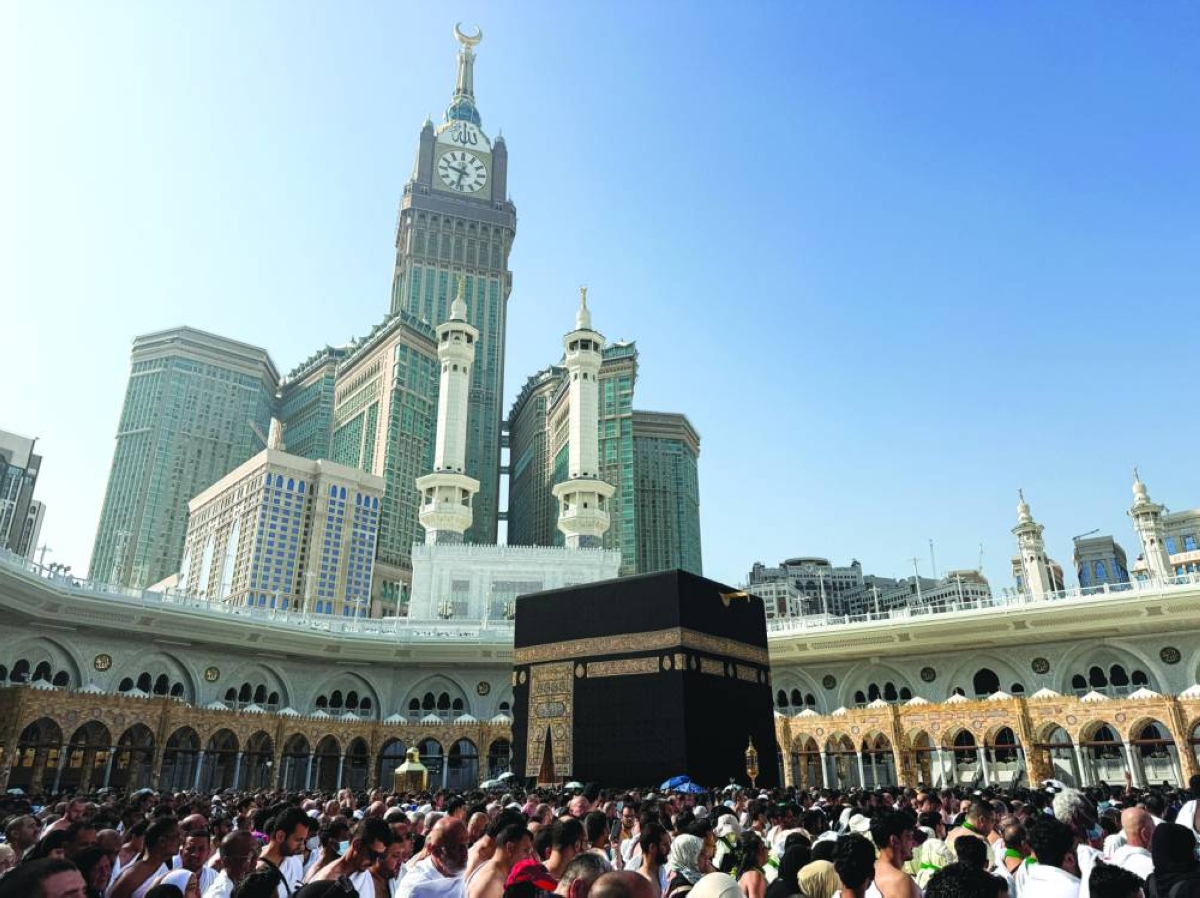
Worshippers perform Friday prayers during the first Friday of the holy month of Ramadan at the Grand Mosque in the holy city of Makkah, Saudi Arabia. In northern hemisphere where the sun does not set

Opinion
US Supreme Court ruling offers little respite for global economy

US Supreme Court ruling offers little respite for global economy

While the US Supreme Court’s ruling on Friday against President Donald Trump’s use of tariffs marks a clear setback for ‌his use of trade levies as an economic weapon, analysts say it offers little immediate ​relief for the global economy. Instead, they expect ‌another bout of activity-crimping confusion combined with near-certainty that Trump will seek other means to replace the ‌raft of global ⁠tariffs now struck down as unlawful. In ‌the meantime, a long list of uncertainties ‌remains — including what new tariffs Trump will seek to impose, whether the funds from the annulled levies will have to ⁠be refunded, and whether territories that entered deals with the US to mitigate their impact will see those pacts reopened for review. Responding to the ruling, Trump announced new global tariffs of 10% for an initial 150-day period and acknowledged it was not clear if or when there would be any refunds. On Saturday, he said, he will raise ‌temporary tariffs on almost all US ​imports from 10% ‌to 15%, the maximum level ‌allowed ⁠under the law. “In general, I think it will just bring in a new period of high uncertainty in world trade, as everybody tries to figure out what the US tariff policy will be going forward,” said Varg Folkman, analyst at the European Policy ​Centre think tank. “In the end it’s going to look pretty much the same.” Economists at ING bank agreed: “The scaffolding has come down, but the building remains under construction. No matter how the ruling reads, tariffs are here to stay.” Friday’s ruling concerns only ‌the tariffs launched by Trump on the basis ⁠of the International Emergency ​Economic Powers Act, or IEEPA, intended for national emergencies. So far, they are estimated to have ​brought in over $175bn in funds. By itself, the ruling chops the trade-weighted average US tariff almost in half from 15.4% to 8.3%, trade policy monitor Global Trade Alert estimated. For those countries on higher US tariff levels, the change is more dramatic. For China, Brazil and India, it will mean double-digit percentage point cuts, albeit to still-high levels. Yet no one expects this to remain the status quo: the Trump administration has served notice long before the ruling that it can and will use other legal vehicles to reimpose tariffs. At the same time, the couple of dozen countries which entered bilateral deals with the US to set tariffs and in some cases invest in the United States - will now assess whether the Supreme ‌Court ruling gives them leverage to ‌renegotiate. The lawmakers who must ratify the European ⁠Union’s pact with the United States will do that as soon as Monday, said Bernd Lange, chair of the trade ⁠committee of the European Parliament. “The era of unlimited, ⁠arbitrary tariffs ... might now be coming to an end,” Lange said on X. “We must now carefully evaluate the ruling and its consequences.” Britain meanwhile expects its privileged trading position with the United States to continue, the government said on Friday of the baseline 10% tariff it agreed with Washington. Indeed, many countries were learning to live with Trump’s tariffs, the bulk of which were being shouldered by Americans, according to a Federal Reserve Bank of New York report released this month. In the ​most recent update of its regular World Economic Outlook, the International Monetary Fund forecast global growth at a “resilient” 3.3% in 2026. China even reported a record trade surplus of nearly $1.2tn in 2025, led by booming exports to non-US markets as its producers adapted to the Trump onslaught. Thus, some countries may choose to stick with their existing bilateral deals with the US rather than “inviting the kind of uncertainty we saw in the spring in 2025,” EPC’s Folkman said of the chaos caused by Trump’s so-called “reciprocal” tariffs.    

Opinion
Ramadan in Gaza: War weary, but Palestinians continue to hold fast to their faith and patience

Ramadan in Gaza: War weary, but Palestinians continue to hold fast to their faith and patience

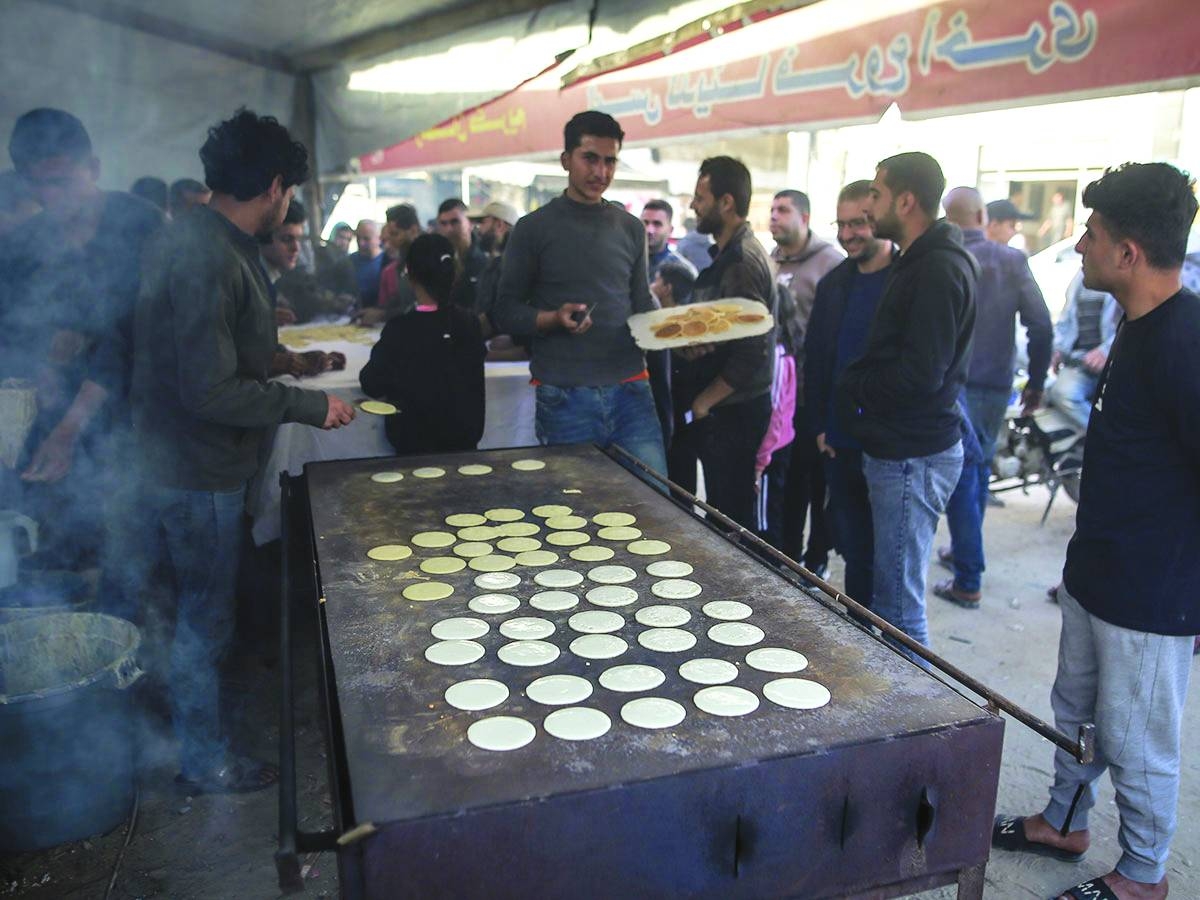
Amid the rubble of destroyed homes and between worn-out tents, residents of the Gaza Strip are welcoming the holy month of Ramadan for the third consecutive time since the outbreak of the Israeli aggression on October 7, 2023. This year, however, they hold onto hope that goodness and peace will prevail during the blessed month following a ceasefire agreement reached last October, despite little change on the ground as humanitarian suffering continues due to the Israeli blockade and restrictions on the entry of sufficient aid. Like Muslims everywhere, the people of Gaza observe Ramadan through prayer and devotion, including performing prayers and reciting the Holy Qur’an. At the same time, Palestinian women and homemakers strive to diversify the Ramadan table with renowned Palestinian dishes, drinks, and sweets that reflect the authenticity and deep-rooted heritage of Palestinian cuisine, alongside newly introduced foods that add variety and break the routine of everyday meals. Culinary traditionsGazans have long held on to culinary traditions and dishes that are inseparable from the holy month. However, the impact of the war, food shortages, and soaring prices — particularly for essential ingredients such as meat, poultry, and fish — has significantly altered Ramadan food customs in the Strip. Some traditional dishes have disappeared altogether due to the unavailability of ingredients or prices that have doubled compared to pre-war levels. Standing at the entrance of her tent in Gaza City, where she now lives with her family after their home was destroyed during the war, 50-year-old Um Bilal Muheisen said that many Palestinian families have inherited cultural traditions, including the preference to begin Ramadan with molokhia served with white rice and stuffed chicken on the first day of fasting. “This tradition has largely faded due to displacement, rising costs, poverty, and the limited means people now have,” she told Qatar News Agency (QNA). She added that the Gaza table was once rich with hearty Palestinian dishes, most notably “maqluba”, Gaza-style fatta made with saj bread (flatbread) soaked in broth and served with white rice and chicken or beef, and various stuffed vegetables. Time-honoured dishes such as maftoul, okra, cauliflower, green beans, stuffed zucchini, and the traditional sumagiyya were also staples of the Ramadan spread. Muheisen also highlighted other dishes that traditionally featured during Ramadan, including musakhan —roasted chicken served on taboon bread with generous amounts of olive oil, onions, and local sumac — which is considered a Ramadan essential. Another celebrated dish is qidra, regarded as one of Gaza’s most distinguished heritage meals. Cooked over fire or in clay pots, it consists of yellow spiced rice prepared with a special blend of Palestinian spices, onions, chickpeas, beef or lamb, and generous amounts of clarified butter. However, she noted that all these culinary traditions have become subject to the harsh economic realities and food shortages caused by the war, which has upended not only homes and neighborhoods but also long-standing dietary customs. Families now rely on limited food and drink options, as poverty and scarce resources prevent them from purchasing the variety and quantities traditionally associated with the holy month. For his part, Chef Moataz Abdo, owner of a well-known restaurant in Gaza City specializing in Eastern and Western cuisine, said the war has profoundly altered Ramadan food traditions and dining rituals that were once deeply rooted in Gaza’s social fabric. He explained that before the war, one of the most prominent Ramadan features at his restaurant was large communal banquets and family gatherings characterized by open buffets and diverse dishes. “All of that was affected last Ramadan,” he told QNA, noting that the difficult living conditions and loss of income among Palestinian families led to a sharp decline in demand for restaurant meals, with many relying instead on what they had at home or on aid distributed to displaced persons. Abdo added that both homes and restaurants in Gaza used to present a wide array of Eastern and Western dishes during Ramadan, particularly rice meals with grilled chicken, various mixed grills, salads, and appetizers such as stuffed kibbeh, grape leaves, tabbouleh, hummus, and an assortment of juices. Traditional beverages commonly served at the Gaza table included carob, hibiscus, tamarind, and qamar al-din, alongside fresh juices made from seasonal fruits. Iftar gatheringsHe further noted that the Ramadan table in Gaza traditionally featured a variety of sweets, most prominently qatayef, Nabulsi kunafeh with cheese, and Arabic kunafeh -one variety of which is produced exclusively in Gaza- along with kolaj, halawet al-jibn, basbousa, and nammoura stuffed with nuts and clarified butter. “Not all families can afford such foods, which are considered relatively expensive,” he said, adding that demand has grown for affordable popular foods such as hummus, foul, falafel, hummus fatta, pastries, and manaqeesh, which remain within reach for many amid the deteriorating economic conditions caused by the war. In the same context, psychologist and social specialist Noha Odeh said Ramadan food traditions in Gaza have been profoundly affected by the war and the resulting poverty, unemployment, and resource scarcity among Palestinian families. “Ramadan in Gaza has traditionally been marked by spiritual, familial, and culinary atmospheres,” she told QNA. “Streets and markets would be filled with countless varieties of food that made their way to family tables, becoming traditional and sometimes newly introduced dishes in line with the evolving Palestinian kitchen. But over the past two years, as we have spent Ramadan amid killing, displacement, hunger, and fear, these manifestations -especially food traditions- have largely disappeared.” Odeh explained that the forced changes imposed by war have affected all aspects of life in Gaza, including Ramadan customs. Communal iftar gatherings, once a hallmark of social solidarity, have nearly vanished, as families can no longer host large meals in their homes-many of which have been destroyed. For many breadwinners, the daily challenge has become securing a single iftar or suhoor meal for their families, while tens of thousands of displaced persons break their fast in shelters or amid the ruins of their homes. She added that iftar, once a social occasion, has become a daily ordeal for thousands of families facing food shortages and relying heavily on limited charitable assistance that often fails to meet the nutritional needs of those fasting. Concluding, Odeh said Ramadan in Gaza is no longer as it once was. Many families who were previously well-off now live in displacement and sorrow. Joy has turned into hardship, and long-standing Ramadan traditions have shifted under the weight of war. Yet despite the immense challenges, Palestinians in Gaza continue to hold fast to their faith and patience, striving to preserve their Ramadan traditions as much as circumstances allow.

Tech
Top Noise-Cancelling Headphones & Earbuds for 2026 — Arabian Post

Top Noise-Cancelling Headphones & Earbuds for 2026 — Arabian Post

Noise cancellation was once considered a premium feature, typically chosen after other aspects were already established. However, it has now become an essential component of daily audio consumption, providing users with greater control over background

Lifestyle
How Ramadan’s late-night chai culture can save London’s n…

How Ramadan’s late-night chai culture can save London’s n…

On a freezing –2˚C January night in London, I walked across Piccadilly Circus. The Christmas lights and angels were gone, replaced by National Basketball Association posters to mark its return to the capital.At just after

Tech
Mayo Clinic bets on Gulf data leap — Arabian Post

Mayo Clinic bets on Gulf data leap — Arabian Post

Mayo Clinic Platform is positioning the Gulf as a proving ground for a new generation of data-driven healthcare, with its chief operating officer Maneesh Goyal outlining plans to expand the organisation’s digital ecosystem and deploy

Opinion
How will companies get refunds after US court ruling on tariffs?

How will companies get refunds after US court ruling on tariffs?

The US Supreme Court said yesterday that tariffs imposed by President Donald Trump under an economic emergency law were illegal. In a landmark 6-3 decision, the apex court struck down the sweeping global tariffs imposed by the US president under the International Emergency Economic Powers Act (IEEPA). The court ruled that the IEEPA, a 1977 law meant for national emergencies, does not authorize the president to impose broad trade tariffs. Chief Justice John Roberts noted that the Constitution grants the power to levy taxes and tariffs solely to Congress. The court did not say how the government should refund the illegal tariffs, worth an estimated $175bn. For nearly ‌all goods subject to tariffs, an importer posts a bond with the Customs and ​Border Protection agency and pays an estimated ‌tariff on the merchandise to bring it into the United States. The government makes a ‌final determination of the tariffs on those goods, ‌a process known as liquidation, which usually happens ‌314 days after entry of the goods. Excess payments are refunded or the importer must cover the shortfall. Importers filed suit at the US Court of International Trade to try to stop the process of determining final tariff payments while the Supreme Court was considering the case, but that court denied the request. Did the Supreme Court say how to refund the money? No. In a dissenting opinion, Justice Brett Kavanaugh said the court’s ruling was likely to generate serious practical consequences in the near term, including refunds. He noted it was acknowledged at oral arguments that distributing refunds was likely going to be “a ​mess.” The case will now go back to the Court of International Trade to sort through the refunds. More than 1,000 lawsuits have been filed by importers in the trade court seeking refunds, and a flood ‌of new cases is likely. The court ruled in December that ​it had the power to reopen the final tariff determinations and order the government ​to pay refunds with interest — an authority the Trump administration said in court it would not challenge. That decision removed potential legal complications to refunds, according to trade experts. Each importer might have to sue in the Court of International Trade to get a refund, and it is not clear that a class action could be formed to cover the broad range of companies that paid tariffs, legal experts said. Importers have two years to sue to claim a refund, under US trade law. The process could disproportionately hurt smaller businesses, many of which already suffered more from tariffs than well-funded companies like Costco. Lawyers for importers said some smaller ‌importers might abandon a potential refund ‌rather than pay thousands of dollars in legal and court fees to bring a case. The Court of International Trade has overseen large-scale refunds before. Congress enacted a harbor maintenance tax in 1986 that was assessed on the value of all cargo into and out of US ports. The Supreme Court ruled part of the tax was unconstitutional in 1998. The Court of International Trade oversaw a refund process involving more than 100,000 claimants that was managed by Judge Jane Restani, who remains on the court. Trade experts said the government has tracked tariff payments and improved ​recordkeeping systems that should make it easier to determine the size of refunds. Small businesses have called on the Trump administration to issue automatic repayments and have expressed concern that the government might scrutinize entry paperwork in a way that slows the refund process. Even if refunds are distributed, some companies that sought them might not get the money. That’s because the company might not have been the importer of record, which is the entity responsible for ensuring imported goods comply with regulations and paying duties. Once the refund is distributed, it will depend on the contractual arrangement between the company that paid the tariff and the importer of ‌record to determine who ​ultimately gets the money, creating another potential legal dispute. The process could take years, trade groups have warned.  

Business
You Can Now Create Arabic Music with Google’s Lyria 3

You Can Now Create Arabic Music with Google’s Lyria 3

  On Thursday, 19 February, Google announced the launch of Lyria 3, the latest generative music model from Google DeepMind that will enable users to create personalized audio greetings and tracks in Arabic.  With Lyria

Tech
Origen secures $50 million to scale AI ambitions — Arabian Post

Origen secures $50 million to scale AI ambitions — Arabian Post

Abu Dhabi-based artificial intelligence firm Origen has raised $50 million from Bluefive Capital, marking one of the larger disclosed growth investments in the emirate’s emerging AI ecosystem and signalling fresh momentum for technology ventures anchored

Tech
OpenClaw update expands model support as security alarms escalate — Arabian Post

OpenClaw update expands model support as security alarms escalate — Arabian Post

OpenClaw, a widely used open-source autonomous AI assistant, has pushed out version 2026.2.17 with expanded capabilities that include support for Anthropic’s latest Claude Sonnet 4.6 model and enhancements across messaging platforms and automation workflows. The