
Tech
AI and Jobs: which roles will disappear and which will be created?

AI and Jobs: which roles will disappear and which will be created?

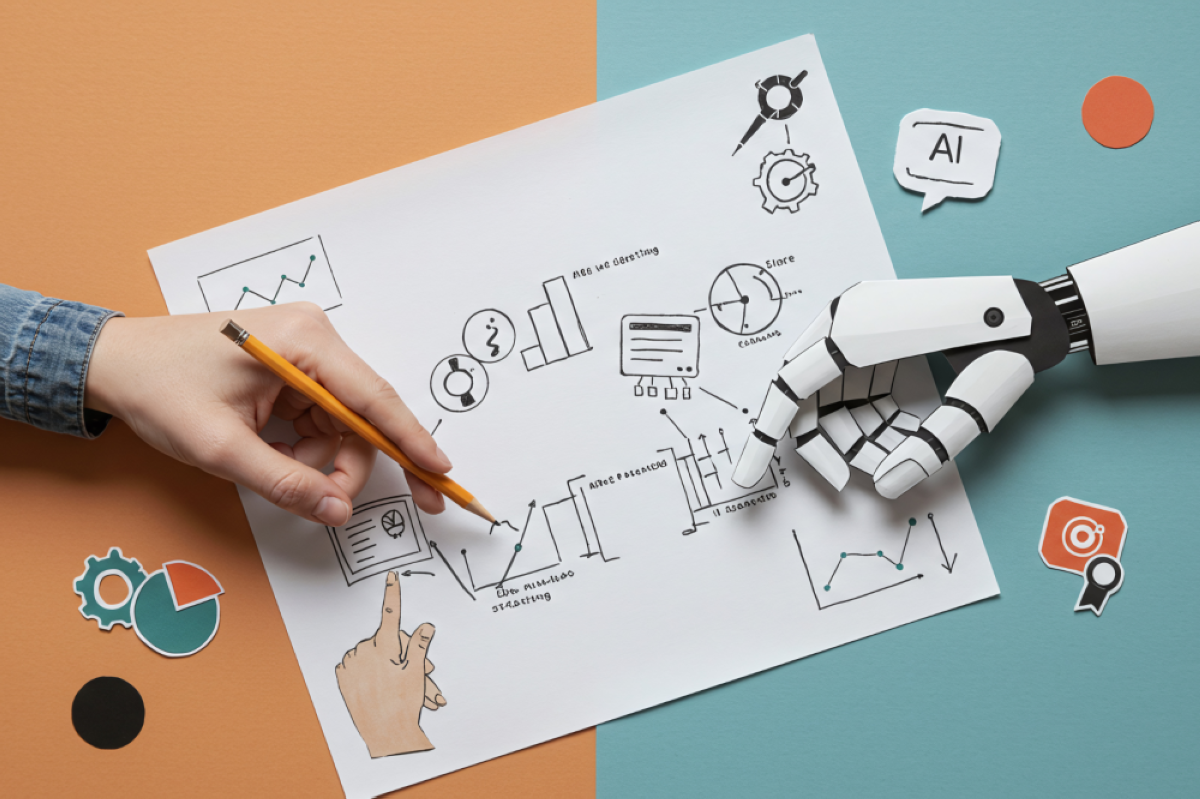
Artificial Intelligence is no longer a future scenario. It is already reshaping how work is performed, how organisations are structured, and which skills are in demand. Artificial Intelligence is no longer a future scenario. It is already reshaping how work is performed, how organisations are structured, and which skills are in demand. The real question today is not if AI will affect jobs, but how fast – and who adapts.According to multiple global studies, the world is entering the most profound labour market transformation since the Industrial Revolution. Most credible research agrees on one important point: AI primarily automates tasks, not entire professions. However, when a large share of tasks within a role is automated, the role itself inevitably shrinks or disappears.Roles most exposed include:Administrative and clerical jobsData entry, payroll processing, basic accounting, and standard reporting are increasingly automated.First-line customer serviceAI chatbots and virtual agents now handle a growing share of customer queries, complaints, and support cases.Routine content productionSimple news summaries, product descriptions, SEO texts, and basic marketing copy are increasingly AI-generated.Entry-level legal and financial rolesDocument review, contract analysis, and due-diligence tasks are being automated at scale.The World Economic Forum estimates that 83 million jobs could be displaced globally by 2027, as automation and AI adoption accelerate.At the same time, AI is creating entirely new roles and significantly increasing demand for others.Fast-growing roles include:AI and machine learning specialistsData scientists and data engineersAI product managers and AI strategistsCybersecurity expertsDigital business developersChange managers and transformation leadersHuman skills become more valuable, not lessParadoxically, the rise of AI makes uniquely human capabilities more important. According to OECD and McKinsey, demand is rising for skills such as:Critical thinking and judgementCreativity and complex problem-solvingCommunication and storytellingLeadership and decision-makingEthical reasoning and accountabilityAnother fundamental shift is underway: the labour market is moving from fixed job titles to skills-based work. Individuals increasingly combine domain expertise, AI tools, and business understanding in new ways.The World Economic Forum describes this as a shift from jobs to skills. Conclusion: AI Is not taking Jobs. It is transforming them. Every major technological shift has created fear. But history shows that those who invest early in reskilling, education, and adaptation benefit the most. AI does not signal the end of work. It marks the beginning of a new era of work.  FACT AI AND THE FUTURE OF WORK83 million jobs expected to be displaced globally by 202769 million new jobs expected to be created in the same period44% of workers’ skills will need updating within five years60-70% of tasks in many white-collar roles can be partially automatedAI-related jobs are among the fastest-growing globallySources: World Economic Forum, McKinsey, OECD, Gartner, LinkedIn Economic Graph Related Story

Tech
OpenAI turns 10 years: A decade that reshaped artificial intelligence, from chatbots to global infrastructure

OpenAI turns 10 years: A decade that reshaped artificial intelligence, from chatbots to global infrastructure

Ten years that transformed AI from research to everyday reality In December 2025, OpenAI marks ten years since its founding, closing a decade that fundamentally reshaped artificial intelligence and its role in society. What began in 2015 as a research-driven initiative focused on building safe and beneficial artificial general intelligence (AGI) has evolved into one of the world’s most influential technology platforms and a catalyst for a global AI race. Today, artificial intelligence is no longer experimental. It is embedded in everyday work, education, media, software development and government services, while competition between global technology giants has intensified. For much of its early existence, OpenAI operated largely within academic and developer communities. That changed decisively in late 2022 with the launch of ChatGPT, which introduced large language models to a global audience. Adoption was unprecedented. Within months, generative AI became a daily tool for writing, learning, research and coding. By 2025, OpenAI’s ecosystem, led by ChatGPT and its API platform is ,estimated to serve around 600 million monthly active users worldwide, making it the most widely used standalone AI service globally.OpenAI’s success, however, also ignited a broader transformation. Google rapidly scaled its Gemini platform by embedding AI across Search, Android and Gmail. Microsoft positioned Copilot as an enterprise standard by integrating AI directly into Office, Windows and cloud workflows. At the same time, specialised players such as Anthropic and Perplexity AI carved out strong positions in professional and research-oriented use cases. One way to make sense of today’s AI landscape is to view it in four broad layers:1. At the consumer level, AI has become part of daily life. Tools are commonly used for writing, learning, translation and search, with platforms such as ChatGPT and Gemini driving mass adoption and introducing hundreds of millions of people to AI-powered services. 2. At the professional level, AI supports more specialised knowledge work. Services such as Claude and Perplexity AI are built to handle long documents, structured analysis and source-based research, making them popular among journalists, analysts, researchers and legal professionals. 3. At the enterprise level, AI is embedded directly into organisational workflows. Microsoft Copilot and GitHub Copilot automate office tasks and software development, delivering measurable productivity gains across businesses, governments and public institutions. 4. Beneath all of these sits AI infrastructure — cloud platforms, large-scale computing capacity, data centres, application interfaces and national AI systems. Operated by companies such as OpenAI, Google and Microsoft, and increasingly backed by sovereign investment, this foundational layer enables everything built on top of it. Across these layers, a relatively small number of platforms now account for the majority of global AI usage. ChatGPT and Gemini lead at the consumer scale, Copilot dominates enterprise environments, and specialised tools serve professional niches. Together, they shape how artificial intelligence is used in practice today. The Middle East and North Africa (MENA) region has emerged as one of the fastest-growing AI adoption markets globally. High smartphone penetration, young populations and government-led digital strategies have accelerated uptake across the region. By 2025, MENA is estimated to account for 30-40 million monthly AI users, representing roughly 3-4% of global generative AI usage. While this is modest in absolute terms, growth rates exceed global averages, particularly in the Gulf Cooperation Council (GCC) countries. Within the region, Qatar stands out for its high level of adoption relative to population size. With an estimated 700,000 to 1 million monthly AI users, approximately 25-30% of Qatar’s population actively uses AI tools. This places the country among the top AI adopters per capita in the Middle East, alongside the UAE and ahead of several larger economies. AI usage in Qatar is strongest in education and research, government and smart city initiatives, media and bilingual content production, and finance and fintech. Beyond adoption, Qatar has also invested heavily in AI infrastructure, data centres and cloud capacity, positioning itself not only as a consumer of AI but as a regional enabler. As OpenAI enters its second decade, CEO Sam Altman has outlined a clear strategic shift for the industry: from chatbots to autonomous AI agents, from content generation to task execution, and from standalone tools to platforms that do real work. This transition signals the next phase of AI development, where trust, regulation, integration and economic value will define success. Ten years after its founding, OpenAI represents more than a single company’s journey. It reflects how rapidly AI has moved from research to mass adoption and now toward becoming core infrastructure for economies and societies. For Qatar and the wider MENA region, the opportunity ahead lies not only in using AI, but in shaping how it is governed, scaled and integrated into national development strategies. As OpenAI turns ten, the global AI race is no longer centred on Silicon Valley alone. It is global, multi-layered and increasingly strategic. Related Story